
Guy Forsyth Banishes the Demon Electricity
How does he coax those mind-shifting notes from his resonator guitar?
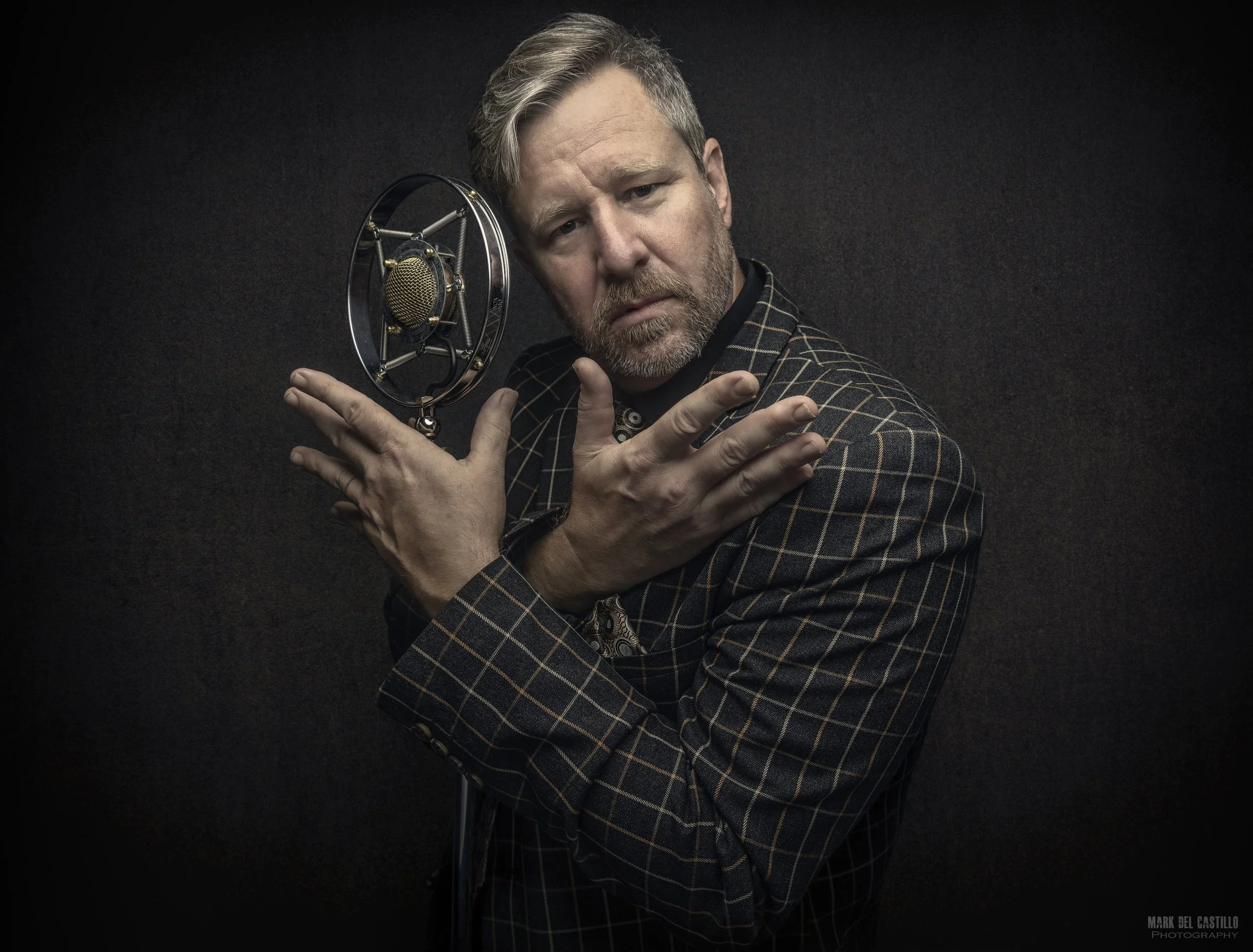
Guy Forsyth has been a fixture in Austin’s music scene since 1990. Photo by Mark Del Castillo.
Since arriving from Kansas City on January 10, 1990, Guy Forsyth has become a cornerstone of Austin’s roots community. He earned a legendary ten-year Sunday residency at Antone’s, won multiple Austin Chronicle Readers Poll awards for “Best Blues Band,” and opened for Ray Charles, B.B. King and Lucinda Williams. His latest record, Rider-EP, is one of his most personal, meant to help us excavate the ghosts we carry in our heads and hearts. Beyond his solo work and co-founding the Asylum Street Spankers, Forsyth leads 78 Special—an ensemble dedicated to revisiting early American music without the aid of “the demon electricity”—and hosts a weekly gospel brunch at El Mercado benefiting the Central Texas Food Bank—embodying Austin’s collaborative spirit in every note.
Here's our full interview:
Your dad worked for TWA.
Yeah, he did. He and my grandfather [on] my dad's side as well.
Oh, wow.
Yeah. My dad wanted to be a pilot in the airlines. My grandfather wasn't. But he worked for TWA back when it was Trans World Airlines. He remembered flying on a Ford Tri-Motor.
My dad wanted to be a pilot, but when he was young, like 16, his eyes weren't — he was the youngest pilot in New Jersey. He would mow lawns to get money to be able to afford time in a Piper Cub. But his eyes weren't good enough to get into the military. So it's sort of a — and at that time in history there were lots of pilots who had lots of hours. But he went to work for TWA and had a long career with them. Eventually he quit and started his own business selling travel books and maps out of, originally out of the garage, specifically to travel agents.
Wow. I love the entrepreneurial zeal of that.
Yeah.
Okay. January 10th, 1990. Let's start there perhaps, a date seared in your brain — you moved to Austin then and I want to know why.
I had heard about Austin from musician friends of mine, most of whom were involved in the folk music scene who had come down and done the Kerrville Folk Festival… And I was well familiar with Texas because my mom's family was living in Houston at the time, and every year we would end up spending summer in Texas, which seems like a poor decision in a lot of ways, but it was in Galveston. So, you know, it involved being near the water and getting sunburned and enjoying being around that. So it was really nice. So I was familiar with Texas. I had worked at Renaissance festivals shortly before I moved down to Austin. And one of the things that I had done was, after doing the Medie Fair in New Orleans, I followed a group of Renaissance Festival participants who we would call Rennies who were doing TRF, the Texas Renaissance Fair. And so even though I wasn't booked there as a performer, I ended up going and hanging out there and just getting piecemeal work while I was there. And one of the people that I knew from the Renaissance Festival circuit was my friend David Rowe, great musician. And he lived in Austin and had suggested, hey, you know, you should come down and, you know, we'll play music. And so I knew him and I knew another person who lived in Austin who I knew from the Renaissance Festival circuit. Now, both of those people ended up moving almost immediately after I moved to Austin.
The two people you knew left immediately?
Right?! And so it really made a clear delineation of like this is my childhood, this is my adult life, because I moved to Austin at 21. I just turned 21 and this has been my home ever since then. Although I'm talking to you from Buda, which is south of Austin. It's in Hays County, but it's really a suburb of Austin.
I would love to have been able to buy a house in Austin, but the cost of living in Austin has grown with the size of the city. And it just didn't make sense at all. And I wouldn't have been able to buy a house that would have suited a four-member family in Austin. It was just — I looked, I certainly wanted to, you know, so this is where I could live. The area that I'm in right now in Buda is mostly young professionals from a really wide ethnic mix who haven't been able to live in Austin or Houston, even if that's where they have made their career.
Sure. When you were hanging out with the Rennies and this is prior to you getting cast as Robin Hood against Little John, you know, and suffering all those bone-cracking, you know, fake throws, if you will, the prep falls of that — was the blues scene on your radar at all? Like, where was the music for you at this time in your life?
Oh, it definitely was. When I was in Kansas City growing up, I think probably legitimately the first exposure to the blues and me having some idea of what it was came from the Blues Brothers movie. And that is because I was already into Saturday Night Live from staying up late and watching Saturday Night Live, and characters like Belushi and Aykroyd were — they were funny, you know, they were inventive. They were alive and I was really interested in Second City and doing improv and doing comedy. In Kansas City, there's some really good blues radio. There was a guy named Lindsey Shannon who had a regular show on one of the stations on Sunday afternoons. It was a couple hours long. And I remember stumbling across that and being, "Oh, wow. This is really cool." I got a guitar around the time that I was 16. I borrowed one from my friend David Maloney. David Maloney I met in grade school. By the time that I'd met him, he had already lost two arms from an electrical accident. He climbed a power pole when he was like 12 or 13 or something like that. And he had lost all of one arm and he had about this much of the other one. So he had an articulated hook. And it sounds like a sad story, but he got laid before anyone and could kick the hat off your head from 10 feet away. He was amazing and unstoppable and ended up being a really good friend of mine. And my friend Grant Watts got a guitar and started to teach himself how to play. I watched him do that.
And so I borrowed a guitar and I was really — I love to sing ever since I was a kid. I've loved singing and I became aware that I could memorize songs and, even when I was really small, I remember going, hey, you know, like I could sing all the words to "Time in a Bottle" just from hearing it on the radio. And so I was interested in music. And my parents had similar record collections when they got married. And so my brother, who's about a year and a half older than me — we're Irish twins — we had a Fisher-Price record player. And so at the same age I was learning how to stack blocks, I was learning how to drop the needle on a record player. And it wasn't pop music as much as it was western music, not country music, but rather Sons of the Pioneers, Marty Robbins, Frankie Laine, and a lot of Broadway musicals. And so go-play for us included putting on records, and so I got a whole bunch of certain songs, so they all sort of stuck and had a sense of identity. I had a radio. I, you know, and all of the songs that came from pop and rock. That was, you know, the '70s was a really great period of time for that. You know, I was born in '68.
Yeah, we're the same age, by the way.
Cool. Cool. And so, but the most important of all of the radio stuff that I heard for me was Dr. Demento's Novelty Radio Show.
Oh, yeah. I remember that.
And so that was great because it was funny and, you know, it's novelty. It's engaging but also he played a lot of old records and so I got used to hearing the sound of a 78 record or, you know, old scratchy records. And so I grew up with a love of music and a love of records but not necessarily a real awareness of pop music. And I found later on while living in Kansas City that the library had stacks and stacks of records. And so I would go to the library. Public library was close by. And I just pulled records off of the shelves and listened to them. One of the things that I stumbled upon doing that was Robert Johnson. And so the first time I ever heard Robert Johnson was at the public library. And what I heard in that music that turned a light on for me was something that was outside of the music business, you know, like it wasn't something that people were talking about selling or, you know, it's not on the cover of Rolling Stone or things like that. But I heard something that was really immediate even though distant through an analog transition and it caught my imagination. I was really into it.
I don't have any cultural connection directly to blues. I didn't have a mentor. I didn't have exposure to it in the environment, which was the suburbs of Kansas City. But there was this thing and it was really interesting. So I just started to do my own research about it, which looked like, you know, getting books out of the library and going to bookstores and just looking at — or music stores and looking at things. I got a harmonica for Christmas from my father when I was 16. Not because I really had an interest in harmonica music at that time, but as my dad was selling travel books and maps, he would go to conventions and stuff like that. And one Christmas my brother got "Juggling for the Complete Klutz" on the Klutz Press, and I got "Country and Blues Harmonica for the Musically Hopeless," which came with a harmonica and a cassette tape. It was written by a guy by the name of John Gindick.
And it was great because I was totally interested in it. You know, it became a part of my personality really at that point. I had a harmonica with me all the time and I would practice and play while I was at school and I was always looking for places with interesting acoustics, like being in stairwells where you would hear it and listen to it. So that was how I got into it. Later on, when I had a vehicle downtown in Kansas City, I saw this one place that said Blues Jam on Tuesday Night that was painted in white paint on a blue wall. And, you know, just like really casually, just like, oh yeah, man, I should do something. I should put — and I started to sneak into clubs and there were some clubs I could get away with it. And I wasn't interested in drinking at all. And so there were some clubs I could just sort of sneak into and watch the band. And eventually people would recognize me as that, you know, that kid who hangs out, but he doesn't cause any trouble, you know, he's not trying to drink, you know. And so I was able to start seeing people play and going to blues jams and open mics and just learning more and more as I went along.
Do you, you know, you are often associated with the blues, but do you think of yourself per se as a blues artist or is it — in your mind, you know, are your interests broader than that?
Well, I mean, some people use the word bluesman, but I do not. I'm a musician. I'm a — you know, like I love music and I've played a lot of different types of music through my career. And one of the things I think that defines the Austin music scene is a free exchange of genre. And that a band that you might happen to go see on any night in Austin that includes, say, four or five musicians probably also plays in 10 or 15 other bands. And you could make a Venn diagram of that band and then all these other bands surrounding it. And one of those bands is going to be a country band and one of those bands is going to be a blues band. And one of those bands is going to be a jazz band. And one of those bands is going to be backing up an original songwriter. And eventually you forget which hat you're supposed to wear to the gig.
I thought you were gonna say eventually you reach back to the Asylum Street Spankers.
The Spankers.
The Kevin Bacon, you know, six degrees of separation sort of —
Right? Yeah. Yeah. Yeah. In a lot of ways.
Because everybody plays out these collectives, the bands that like the Spankers that are sort of collectives in a way, you know, they send off, you know, artists into the universe to —
It's interesting, all the different places that the Spankers have gone to at this point. I saw my friend Kevin Smith, who was the original bass player, last Sunday night while I was loading in and he was loading out of the Continental Club. He plays bass with Willie Nelson now. He's Willie Nelson's bass player. Aiofe McLaughlin, the fiddle player from the band, is now the house fiddle player at the Grand Ole Opry. You know, and Wammo has just finished his most recent recording and is on his way out to California to Santa Cruz because he's got a friend out there who's doing some mixing for him. I just talked to Christina Marrs on the phone. And she's got some friends who are coming to town and was asking what I'm doing this weekend, you know. So, yeah.
Oh, wow.
And Pops Bayless and John Dodson, they had their own career with Shorty Long and other things. So it's amazing all the different people have come out of that.
Well, back — I love your statement about the free exchange of ideas and the sort of the genre skipping or hopping or blending, if you will. And one of the things I'm struggling with and would love your advice on, you know, for the sake of the reader, you know, these genre labels are perfectly imperfect, but it's helpful for the reader to at least, you know, if they're being introduced to an artist for the first time, to somehow place them a little bit. So where do you see yourself being placed?
I'm a — well, okay. Before I get into genre, I'm a songwriter.
Yep.
And I'm a bandleader and I'm — and in some sort of mild way, I'm in the record business because I have my own record label now. Not so you would notice because of what has happened to selling records and all that in the industry in the past 20 years. I would say I am an original songwriter who draws very heavily from roots music.
Right.
And I'm very interested in the history of music because I think that informs what I do and what I think music can be, you know. So you could call it Americana or you could call it Americindie.
Yeah.
Or you could call it, you know, Unrepentant Schizophrenic Americana, which is the title of a live record that I put out, which, you know, because people are asking, what type of music is it? Well, you know, it's unrepentant schizophrenic Americana. It's all these different things, which is really true about music. Austin has never had musical infrastructure like Nashville has. Nashville has this identity which is based around the publishing industry that based itself there. And so it really is defining itself as this type of music. But Austin, although as, you know, Stevie Ray Vaughan put a label on Austin as a blues town, even though he was only one of thousands of musicians who play blues in Austin — but there's never been anyone who, you know, who was as successful and crossed over to the degree that he did.
Let's go back to shortly after you arrive and after you get past the Rennie chapter if you will and you're starting to gig, you're starting — do you quickly get the Antone's residency going?
Well, not for a couple of years, definitely, because I moved in '90 and for the first year that I'm here, I'm playing open mics and blues jams. The first paying gig that I get is down on Sixth Street at a place which is now, I think, a piano bar. And, you know, it doesn't pay much. I'm busking on the street in front of the UT.
West Campus?
Yeah. Yeah. There was a band called Twang Twang Shock-a-Boom.
Oh, sure. David Garza.
David Garza and Chris Searles and Jeff — what was the bass player's name? But at the same time that I was busking, they were also busking and they generally had bigger crowds than me. But there were three of them. So I got, you know, there was only one person, so I made my money stretch farther. But I would go play across the street and I played on campus and I had people come up and say, you know, you can't solicit here. But, and this is — the people there were like, you can't solicit here, but what you could do is you could start an organization and you could take donations. So we did this thing which was like, you know, Society for the Preservation of Historical Music.
I also worked down on Sixth Street at Joe's Generic Bar starting on the early show on Monday, you know. And — did you remember Joe's Generic Bar? Did you ever go there?
I did.
It was the least you could ever have and call it a bar because what they had was a refrigerated box that they just sold beer out of. And it wasn't so much a building as wood thrown from one building over to the other one, you know.
Exactly. Right. It wasn't — you couldn't even call it a building. It was a lean-to.
And so there was never a cover. The doors were wide open. I had already worked at Renaissance festivals and I was used to working for tips, and so in that situation I — you have a bucket, you know, and I was used to doing that. I was used to getting in people's face and going like, having a good time, do you know why you're having a good time? You know, and putting the bucket in their face. So I ended up being able to get a group of musicians that could make at least a little bit of money. And I built on that and eventually I found some really great musicians who, you know, were also at a period of time where they were trying stuff out and, you know, just trying to make a go of it. Rich Cherry the drummer had just moved from New Orleans and played with him a lot. Kevin Smith, the bass player I mentioned, was the first bass player that was in my band, although he quickly had other things that, you know, other things to do because he's been successful and working hard his whole career. And Keith Bradley, guitar player. Rob Douglas was the first, was the bass player that came after him. So a lot of different musicians, but working down on Sixth Street for a couple of years, like in '91, '92, '93, I played there, you know, 200 or 300 nights of the year. I was just on Sixth Street working all the time. Sometimes going, doing an early show from 7 to 9 and then carrying my amplifier down the street to another place to play from 10 to 2 or 3. At one time in Austin when they changed the times and you could play till 3 in the morning.
Man, I remember those days. I mean, at this stage of your life and your career looking back on those early days, I mean, what's what's the older Guy Forsyth saying, you know, saying about the younger Guy Forsyth?
Well, I don't think that if I was 21 right now and I had just moved to Austin to try to make a go of playing music, I don't think that I would be able to in the same sort of way because it was a lot less expensive to live in the Austin that was so ideally captured by "Slacker."
Right. Richard Linklater's movie.
Yeah, which was literally filmed when I arrived. That's the exact Austin that I moved to. It's interesting because for me it's like it's perfect, right? You know, I can just like that's exactly where I moved to in 1990. So the cost of living was low. I ended up, you know, renting a room in a house for like a hundred bucks a month. And I could eat at — I could go to Kim Phung and get noodles for three bucks, get a huge thing of noodles. I could go to Tamale House and get the migas for three bucks and get a huge thing of migas. And so you could live on like $10 a day and get by. And so that's what I did. And since I didn't have any really expensive habits, I was able to do music full time. And I've, you know, and I've been a full-time musician all the time since I moved here. I haven't had any other job. I've never had like a paycheck coming from another source. I've never had an employer.
Which is — how lucky am I? What a fabulous thing, you know? I know that I'm very, very lucky. I don't think that if I was 21 trying to reproduce that, it would happen here. It may happen somewhere else. God only knows. But the industry has changed a whole lot. The world has changed a whole lot going back to 1990.
Are you gigging this weekend or around next week?
Yeah. Let me see. I'm playing at the Saxon Pub [at] 6 o'clock on Saturday. On Sunday, I'm playing at El Mercado. I'm doing a gospel brunch that raises money for the Central Texas Food Bank. And that goes from 11 or 11:30 to 1:30 on Sunday. And always the money goes to the Central Texas Food Bank. And in the evening, I'm playing with Willie Pipkin at the Continental Club in the evening.
Oh, right on. Yeah, Willie's one of my favorite acts to see as well as Heybale, which is just prior, I believe, to Willie.
I think you should come to the gospel brunch because I think the gospel brunch is an interesting thing and I think it's on point with the story because it's a community effort to try to take care of people. You know, like as opposed to it being the state or the federal responsibility, and it's feeding the hungry. It's absolutely nonpolitical in that no one has to take some sort of litmus test to get fed by the food bank.
Great. Thank you for the time. Such a thrill for me to have this conversation.
Happy to chat more about it. I was in the sort of first batch of people that ended up getting assistance from the Health Alliance because I did not have medical insurance before that. And through this period of time before that, I was always one misstep away from being broke and homeless because had I, knock on wood, accidentally slammed my hand in a car door or, you know, fallen off my bike or something like that and hadn't been able to work, I would have undoubtedly ended up being taken care of by my family. A fact that my family explained to me at one point, you know, about like, you know, what are you doing? You know, what happens if something happens to you? You know, that'll be my retirement, you know, and, you know, I was — I have always been really proud of the fact that I've done everything on my own terms and, you know, I borrowed $400 from my grandfather so I could get an amplifier at one point, you know, but otherwise I just did everything else trying to get by on my own. Now, I have a great family. I have a wonderful family. Every time I talk to other people about their families, I shiver. I have — I just have a wonderful brother. I have a wonderful sister. I have wonderful parents. My parents got divorced, but they got remarried to other people. We get together, all of us together. It's like it's totally evolved in a way that nothing else is in my life.
That's amazing. What a blessing.
Yeah. Very lucky. Very lucky that way.
