
Taméca Jones and Her Powerhouse Presence
A candid sit-down with Austin‘s very own “Empress of Soul.”
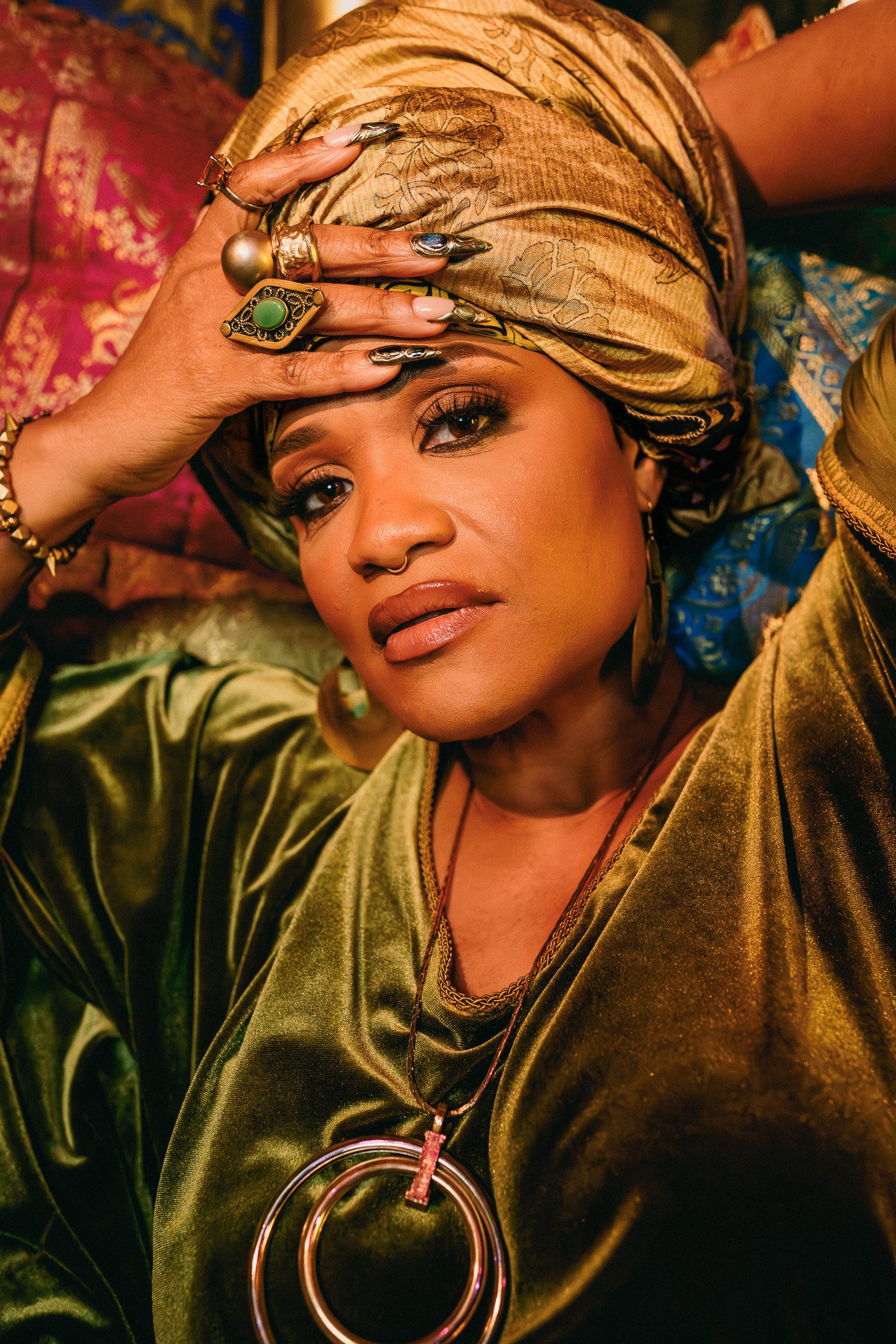
Taméca Jones, Austin’s “Empress of Soul.” Photo by Jon Currie. Creative Director: Isa Sofía Mikhail. Stylists: Isa Sofía Mikhail and Mel Tiller of Austin Tea Party.
Taméca Jones—known as the city's “Empress of Soul”—has been a fixture in Austin‘s music scene for more than 15 years. A native Austinite and fourth-generation Texan, Jones built her reputation through legendary Thursday night residencies at the Continental Gallery, where intimate performances created magical connections with audiences. After a challenging stint in Los Angeles, she returned home to find an Austin music scene that had evolved dramatically. Now she‘s navigating the post-pandemic landscape while staying true to her roots, working away from pop influences and returning to the pure soul sound that first moved her.
Here‘s our full interview with the one and only Taméca Jones.
You’ve called Austin both “challenging” and “home.” Why both?
I was born here, so of course it’s very familiar territory for me. But Austin evolves, and it’s changing. So it’s become challenging to keep up with the changing musical landscape. It’s been challenging to get people out to shows. My show attendance used to be super high. I used to make all my money from shows, but now it’s just challenging to get people out.
Why do you think that is right now?
I don’t know. It’s hard for me to say, because sometimes I’m a hermit. And I never used to be. Pre-pandemic, I was out there all the time playing shows. But now I’m in hermit mode. And I also don’t play out as much because there’s not as much money out here for me.
When I got back from Los Angeles, my homecoming show was very well attended. I made a lot of money. I’m back and it was like, “Oh my God, I’m so glad you’re back, Taméca.” I’m like, “God, I’m so glad to be back home. LA was so hard and wore on my mental health.” And I had residencies after that at C-Boys, and they were terribly attended. I barely broke even. My slot was at midnight. I should have started at 9 or 10 maybe. I don’t know if people are staying out that late.
How has your relationship with social media affected things?
I’m Gen X, so that may not have anything to do with anything. But it’s super hard for me to get used to social media and TikToks and Instagrams. I used to be very popular on Facebook because I wrote a lot of rants, and people loved my rants. But it doesn’t necessarily translate to show attendance. And that’s something I’ve noticed over time. And I don’t have the money to invest in photo shoots, and it’s been super hard for me to get back to where I was pre-pandemic. But that’s anybody, honestly. That’s a lot of people.
How would you say your relationship with Austin has evolved since you’ve come back?
I don’t think it has evolved at all. I’m so stuck in the pre-pandemic ways, and I don’t think I’ve evolved enough to evolve with Austin. And that’s also part of the problem. I just kind of mope. I’m kind of a moper sometimes, like woe is me. I’ve also forgotten to pound the pavement, and I’m not reinventing myself. A lot of people really don’t know who I am. A lot of transplants, so I have to reintroduce myself, and I’m tired. I’ve been in the industry for like 15 years.
Let’s talk about that Thursday night residency you had at the Gallery upstairs from Continental Club. That seems like it was a formative time for you.
I had that for many, many years. Every Thursday, and it was—there were no stakes involved. It was just a fun time. It was a free cover initially, and I would make tips and whatever was at the bar. So it was easy back then, because it wasn’t a career yet. I didn’t depend on it to make a living.
The second it turned into a cover charge—first it was $5, and people still came, packed it out. $10, still came, packed it out. And when it became a business, that’s when it lost some of its magic. For me, it became a source of deep anxiety. It still is. I never know what I’m gonna make, who’s going to show up.
That must be nerve-wracking, especially when you have bills to pay.
Before, I used to live with my mother. I was a single parent, so I didn’t have that many expenses. I just paid for my children and other expenses and bills, nothing too heavy. But when I got out of that situation and I had to pay my own rent, my car note—paying all those bills on the salary of a musician is almost impossible. It is impossible.
Also, before the pandemic I used to make 80% of my income with private shows for corporations. They were like, “Oh, it’s Taméca Jones, Queen of Soul,” which is what I was called back then, before I made the switch to Empress. And I used to eat off private shows. But now, post-pandemic, budgets have dried up.
Before you went out on your own, you were with a band called 8 Million Stories. Is that right?
Yeah. We’d play at this old club called the Lucky Lounge. I can't even remember. It was so long ago.
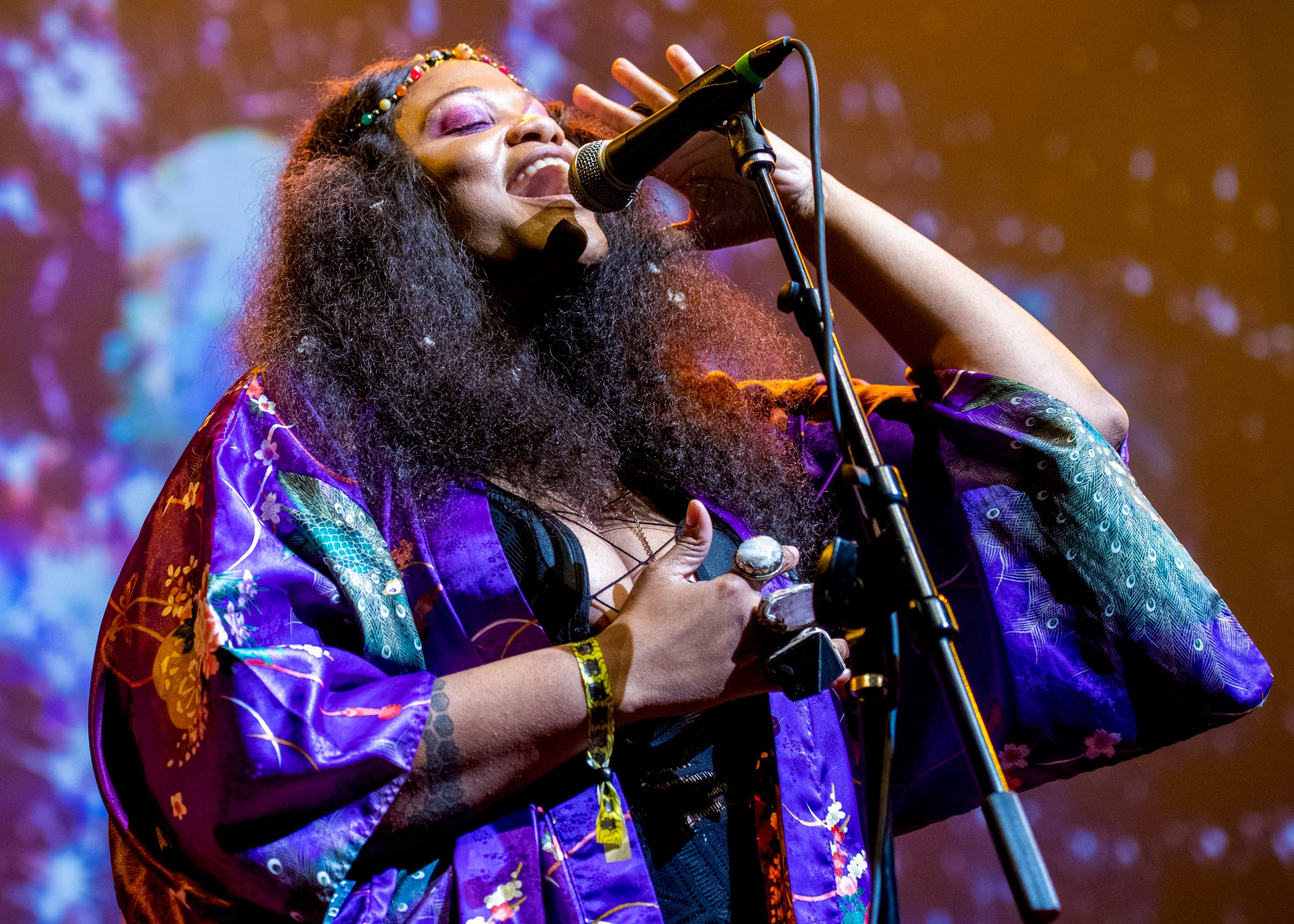
Taméca Jones first found her groove at the Continental Club Gallery. Photo by David Brendan Hall.
For those who have no idea who you are, how would you describe your sound?
I’m the worst at describing myself and hyping myself up. I’m the worst at that. I’m drawing a blank.
Going back to that time when it was free and low stakes at the Gallery, when you’re exploring and finding your voice and honoring influences like Tina Turner and Chaka Khan and Aretha—when did it start to click for you that this could be a real artistic journey?
For sure, the Gallery was a magical, magical time in my development. Just seeing the energy there, the passion for what I was doing, the reckless abandon I had when I was singing there—it just solidified that what I was doing was something special to other people. It was special, soulful. It touched people.
People would be like, “Oh, I brought my date here, and we got married.” I think I went to a show at Emo’s, and there’s this guy—he asked me if he could propose to his girlfriend, because their first date was at the Gallery. Of course I said yes. So I sang “Beyond the Sea”—Bobby Darin—because that was her favorite song. And “Under the Sea” from The Little Mermaid.
And I just connected with people through my shows at the Gallery. It was raw, and it was personal. And there was no stage there—we’re all on the same level. It was intimate. Just like a magical place. Every time I go back there, it just fills me up with joy and also a little sadness, because that era is over. Of me not caring—I mean, not caring about money. The innocence is gone a little bit, and I would love to get that back. But like I said, money corrupts a lot of things, and money has corrupted music for a lot of artists, and it’s corrupted it for me. Absolutely. Just the dearth of it.
A lot of artists would identify with that statement.
Yeah, and I’m probably one of few artists who don’t have a day job. And I’m so jealous of other artists who have pivoted and gotten day jobs to make their income steady. And they can do music when they want to. They can fund their music with their day jobs. They can have video shoots and photo shoots, and they can afford to play shows just to play shows. I can’t. I can’t do that. And I tried, trust me. I tried applying for jobs—administrative assistant, personal assistant, administrative things. I don’t have the skill set to do those kinds of things. I’ve been doing music for the last 15 years. So I’m kind of stuck.
Where have you been playing recently?
I’ve been playing at Pershing Hall. I’ve been playing at this place called The Meridian in Buda. Really cool place. But I don’t play out that much anymore, because it’s just a huge risk for me.
Why is it a huge risk?
I’ve been burned so many times. People say they’re going to show up and show out for me, and I’ll make a decent amount of money, only to barely break even. I pay my band well—I try to pay them well, and there’s a minimum I pay them. But a lot of times I end up walking home with nothing.
So you carry a lot of financial risk when you play a show.
Yeah, a lot of financial risk. My band members are employees. They show up for a set fee, they play for me, and then they go home. It’s not like a band that shares the responsibility. It’s Taméca Jones, and I assume the sole financial responsibility.
It becomes this challenging cycle—you need money to do the videos and photos and promo, but you’re already carrying costs like paying the band well.
Right. And also I have to pay my bills, which oftentimes I need assistance from my mother because I didn’t make the quota. I can’t pay my bills, so I don’t have any extra for anything.
And I thought I was going to get the grant last year, and that was a source of—I mean, I’ve gotten over it, but it devastated me when I didn’t get the City of Austin Elevate grant. I think it was $30,000. I applied for the first time last year, and I didn’t get it, and that devastated me. That would have helped me out a lot.
Money has always been the problem for me. And I also think I’m part of the problem as well. I don’t seek out resources. I don’t ask people to help me. Maybe someone would say, “Oh, I’m a social media marketer and I can help you because I love you so much, I love your work.” But I just don’t like asking people to do things, definitely not for free.
Let’s talk about your music. “Plants and Pills” came out in 2024, correct?
Yeah, I worked with Jonathan Deas and Mike McInnis.
How did that experience compare to live performance? Were you happy with how it turned out?
I actually enjoyed making this album, and I would rather spend the rest of my days recording and writing if I could. It’s kind of flip-flopped for me, because I used to love performing, but performing is—I wouldn’t say a burden, but it’s a source of a lot of anxiety.
Writing a song—it took me nine months to make the album because I got a grant. Black Fret. That was my first grant. Because Black Fret actually approached me: “Do you have a project you want to make?” And I was like, “Well, actually, yes.” And so I made my first album with that grant.
I wanted it to be 100% me, and I wanted to show I was a writer of songs that weren’t about sex and longing. I wrote a song about gun violence after the Uvalde shooting. I wrote a song about police violence. It just helped me become a better songwriter.
It seemed cathartic for you to delve into some of those issues and write about them.
Absolutely, especially—it was cathartic because you feel powerless when you see atrocities like that, and politicians aren’t doing anything about it, and you see all these children dying and gun violence in general. And I wanted to write a song to be a vehicle for my frustration and sorrows. So that’s why I wrote that song.
And the police violence—I wrote “Paint the Roses” about police violence. I wrote “Wave and Smile” about—we’re plotting our revenge, we’re plotting our ascent to the top, and we just have to wave and smile through it. So I wrote that song about female empowerment. It was very cathartic for me, and I’m glad I did it.
Any details you want to share about what’s next?
I’m still working through whether I want it to be kind of throwback soul, like how I started my career with “Cotton” and “Sandman,” because those songs seem to be really popular with people. “Sandman” has really stood the test of time.
You want your audience to feel something, to get up and dance. Is that more possible with organic music versus highly tracked productions?
I really want to get back to the organic music versus tracks and loops. Just an organic feel. I really shine when I’m off the leash. When I’m doing “Hard Father” or “Sandman,” I’ve noticed that at the shows that I’ve played, it just feels better. Less tethered. If that makes any sense.
What kind of energy do you want from the audience?
More interaction. I mean, they already interact with me, but I feel like the music I make now, I’m so in my head about it being perfect because they’re tracked, and I can never sing it the same way I did in the studio. And it feels like I’m in a box. So I don’t emote as much. I don’t look at the crowd. I don’t dance on stage. I’m in one place trying to make this perfect, recreate what I did in studio, and that’s so hard.
I want to be out of my head. I want to be out. I can’t be improvisational singing to a track. It’s just a box.
What tracks would you recommend to someone new to your music?
The tracks that I love the most are “IDK”—I always have fun singing that song and it’s a track song, even though it’s a track. I love singing it. And my favorite song to do—I love the new song I made, the “So Gone” song. That’s the first song that I completed off my album.
What advice would you give to up-and-coming artists, especially female artists?
I think they know more than I do. I think the female musicians up and coming have way more information than I would have had coming up. They have jobs, and they’re great. They’re so savvy. They can teach me something, honestly. They’re savvy. They collaborate with other musicians, something that I didn’t do that I’m trying to do now.
I don’t have much to say other than the mistakes that I’ve made. I know: Don’t focus on Austin. Don’t focus on Austin, Texas. There’s so much outside of the city. And I wish I had known that. I get trapped in this bubble—like a steel bubble in Austin—and you’re like, “Austin, South by Southwest, ACL Festival.” To tour is very expensive. I could barely pay my bills, so there’s no way I can finance a tour. So yeah, just don’t get blinders. Don’t just stay in the city.
