
A conversation with Alex Camet and Tomás Volpi about how Chicoselfie blends serious topics with hot beats, mixing influences from Mexico and Argentina to Texas. Meet them at The Twig Book Shop in San Antonio on Nov. 10 for a special in-store performance and conversation.
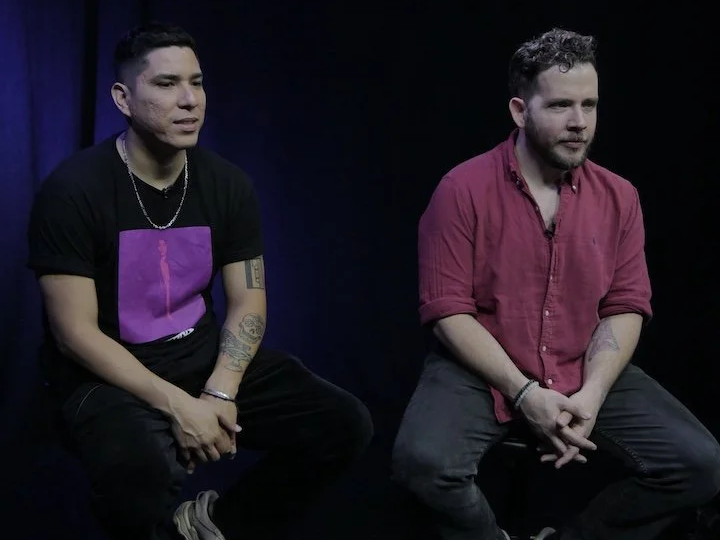
Alex Camet (pictured left) grew up in Reynosa, Tamaulipas, five hours south of Austin. He started playing classical music at 12 and was gigging with a metal band in Monterrey bars by 16, too young to stick around after the set. Tomás Volpi (on the right) arrived from Buenos Aires in 2016 to study audio engineering at Austin Community College. The two met in 2018 as SXSW live-sound volunteers, swapped Instagrams over a shared love of Latin bands, and then didn’t talk for two years.
During the pandemic, Alex needed a bass player for his solo project, KMET. He remembered the guy from SXSW. Their first rehearsal was sabotaged by Snowpocalypse, the big winter storm that put Austin in a deep freeze, but they persevered. By 2023 the project belonged to both of them, with a new name, Chicoselfie.
Our book’s mention didn’t do justice to their sound, so we asked them to set the record straight. We talked about Latin indie, homesickness, HAAM, the political turn on their next album, Extraña Sensación, and why, as Tomás puts it, you can’t just sit around and suffer. There are times you must dance.
Let’s start at the start. How did each of you get to Austin, and how did you find each other?
Tomás: I’ve been here 10 years already. In 2016 I moved to Austin from Buenos Aires, looking for new opportunities, and I started studying audio engineering at ACC. At one point I volunteered for South by Southwest doing live sound. Alex volunteered through the Art Institute, and we were in the same group. We started talking, sharing the bands we liked from Argentina and from Mexico. That was 2018, something like that. We exchanged Instagrams and never saw each other again.
Then, during the pandemic, he texts me one day: “Hey, I’m doing my solo project. I need a bass player.” And I was like, “I have nothing to do right now. I would like to join a band.”
Alex: I had a project I was trying to run, KMET, which is an alternate spelling of my last name. Everyone called me “Caveman” because of that project. I was looking for a bass player, and I remembered this guy I met at SXSW, and I just randomly messaged him on Instagram.
Tomás: And our first rehearsal was scheduled for the day of the Snowpocalypse. So we canceled that one.
When did you realize the project needed to change?
Tomás: We bonded right away through music and ideas. After a couple of years I started collaborating more on the writing instead of just performing bass. Then we hit a wall where we were like, we need to make this project ours, together. That’s when we turned into Chicoselfie, around 2023.
Alex: A lot of people were pitching in: Ruben, my cousin Carlos. But for the most part, Ruben and Tomás were really putting in their time to compose. So we said, let’s change the name, instead of it being only my name. I wasn’t composing only for myself. We were all in it as a collaboration.
Tomás: I felt like we could solidify the concept together, give some support to Alex. He doesn’t have to be the front guy all the time, doing the interviews by himself. He comes with an idea, I answer back, and we edit each other and produce each other. We learned as a production duo, basically. So now Chicoselfie is us two, and people keep participating.
Alex: I was mainly producing everything, co-producing with Tomás. We have a similar vision. I’ll say, I’m thinking about this kind of scene, and it sounds like this. And he’s like, yes, but maybe we can add this. Same sound, different perspectives, and it always works out.
Tomás: I don’t think there’s ever been an idea where we said, no, I’m not going to do this song. It’s more like, oh, there’s something here. Let me do something else with it.
Where does the name Chicoselfie come from?
Alex: We used to play with Sabrina Ellis from A Giant Dog. She was part of Como Las Movies for a bit. I would always just take a selfie or whatever.
Tomás: We were at an afterparty and she’s like, “Selfie boy, selfie boy, come over here!” And I was translating into Spanish: “Chico selfie, come here.” I called him that for two weeks. And we were looking for a name, and at the bar I said, “Dude, what if we call the band Chicoselfie?” Our friend Cameron, another musician, super fun guy, goes, “Boom, money! I hear money. That’s the name.” We’d been trying to find a name that means something. And then we were like, no, it should just be a funny name, because it will stay in people’s minds.

How would you describe your sound, and what shaped it?
Tomás: “Latin indie pop” wasn’t our idea, but we took it. At the time we were really influenced by all the Latin indie that’s been a big scene in the last 10 years: Bandalos Chinos, Porter. Café Tacvba in the old-school sense. Juanes. And we were looking for that synth-pop that’s coming up a lot in Latin music right now.
In the United States, the traditional Latin beats are what’s popular on the charts. But in South America, the indie sound is growing more and more. Latin Americans also do rock and indie and pop, and we wanted to explore that. When we started in Austin, there were a lot of great Latin bands that stick to a style, like cumbia and salsa, but not much of the Latin American indie sound. That was the intention.
You’re both HAAM members. What does it mean to you?
Alex: HAAM doesn’t exist anywhere else. Every time I go to Mexico and tell people about it, they’re like, “What? The city helps you with insurance?” It really helped me a lot.
Tomás: Buenos Aires has a huge scene and a huge independent industry, but nothing like the format HAAM has. When you’re young you think, I’m a rock star, party all the time. But we have jobs, we work mornings or nights and then play, and at some point it takes a toll on your body. You need to go to the dentist. You need to go to therapy. I tell everybody: sign up for HAAM.
If someone’s new to Chicoselfie, where should they start?
Alex: The latest single, “A Dónde Llegar,” then “Fuego” and “Romántica.” They’re so opposite from each other. That’s how wide the range goes.
Tomás: “Fuego” is our nod to the jammy ‘70s Latin rock of Santana. It’s the song we usually close our sets with.
“A Dónde Llegar” is a great example of our indie sound, influenced a lot by Bandalos Chinos. It’s synthy, funky, four-on-the-floor. We wrote it to conjure beachy, feel-good times: let’s stop suffering so much. The video has that theme, too. Even when everything feels like it sucks, the Latin community can say let’s have a good time. I think that’s the spirit of every Latin family in this country. You can’t just suffer. You also have to dance. Music is the answer for a lot of our pains.
Alex: “Romántica” is really important. It’s everything.
Tomás: It’s the first song we co-wrote together. I think that’s where people got “velvety.” We released it with “Burbuja,” and both songs talk about being away from home and missing our towns. Alex sees things happening in Reynosa, and I see things in Buenos Aires, and we can’t take part in the movements there.
It’s called “Romántica” because it’s that toxic love you have with your hometown: I love you, but I hate you too. People back home think, you’re over there, you’re happy, the United States has more opportunities. But emotionally we’re away from family, friends, our whole life. A lot of people think the song is about me and a woman. It’s not. It’s me and my city.
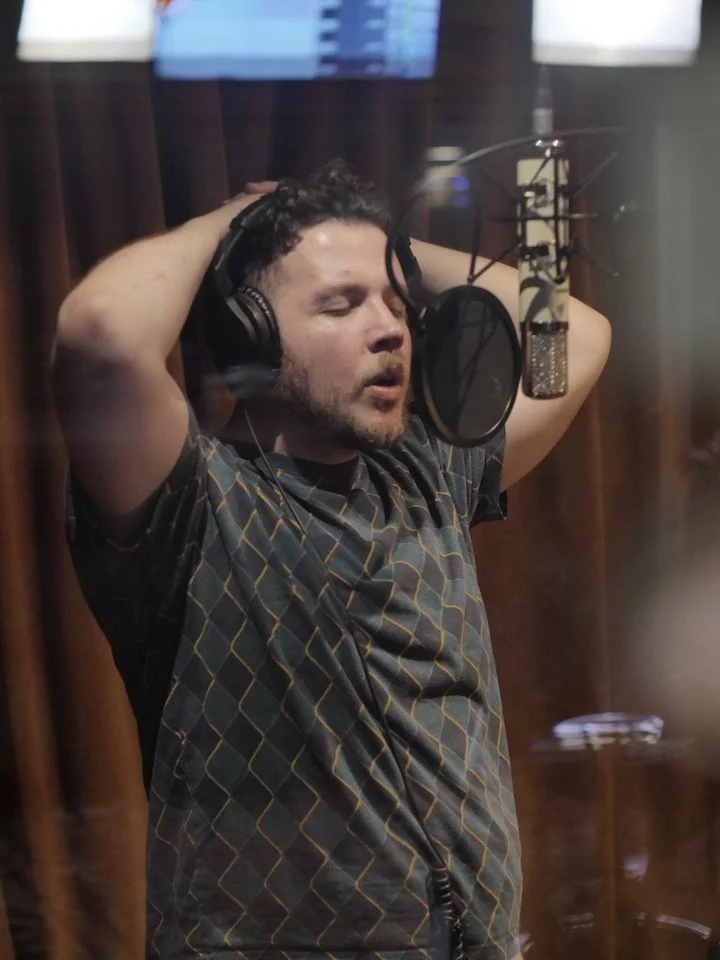
There’s an undercurrent of fun in your music, but serious themes, too. How responsible do you feel to use your voice right now?
Tomás: This is actually a really recent conversation between us. I was born here in the United States, but I moved to Argentina when I was two and didn’t come back until I was 24. Argentina is all about social justice. I grew up with the idea of human rights, civil rights. So I told him, we can’t just pretend everything is all right. We don’t want to turn into Rage Against the Machine, or look like we’re trying to commercialize this. But we need to speak up and not be afraid, because it’s our community, the community that supports us, and a community that supports a lot of Austin.
Alex: The reason we’ve been on the down low is that we’re finishing our next album. And the first song is straight up in your face. It could be a political chant.
Tomás: He wrote it for our first SXSW show, in 2025, right at the beginning of the administration. He said, “Hey, I think I wrote a song because I’m mad,” and sent it to me. Sometimes I correct his words a lot. And I said, “I think this is your best lyric. We need more of this.”
What’s it called, and what does it say?
Alex: “Extraña Sensación,” strange feeling. The first verse says, they’re saying you’re not the same color. Like, hey, this is what they’re saying about us. Why are they saying this?
Tomás: Then it switches to no more constitution, no more rights. I’ll own your gods, I’ll own your sleep. They’re trying to take all of that from us. Latin music dominates the charts. Bad Bunny is on top. But politically, it’s probably the community getting smashed the most. That’s a strange feeling: people love your culture, love the music, but they’re voting for something that could erase that culture completely.
The first phase of Chicoselfie was an exploration of having fun. This new phase is way more expressive, without overthinking the sound. Every song has some message about taking action. They’re trying to do this to you. Go!
Alex: The sound is more authentic to ourselves. More aggressive, heavier on the rock.
Where are you with the album?
Alex: The album is Extraña Sensación, named for that first song. It ties the whole album together, that weird feeling. We’re finishing the mixing right now, and we’re only missing four more songs. We’re hoping for around April, or next summer.
Tomás: We haven’t played the last six months because we wanted to focus on production.
Will you drop another single before then?
Alex: We did a collaboration with Joel Loredo, another artist from Austin who plays regional Mexican music. It’s the last single of this era before we go into the next phase.
Tomás: It’s called “Casi Algo,” almost something. I never worked with regional Mexican, even though I grew up with that music. We showed up and I asked him, what do you want to talk about? And he said, “Oh, this girl. We were just flirting, but it was almost something.” So we went simple: a mix of country, regional Mexican and a little synthy. The video is at a ranch, hanging out with friends.
Alex: It might be the most commercial thing we’ve done. It’s Joel’s world, in a way.
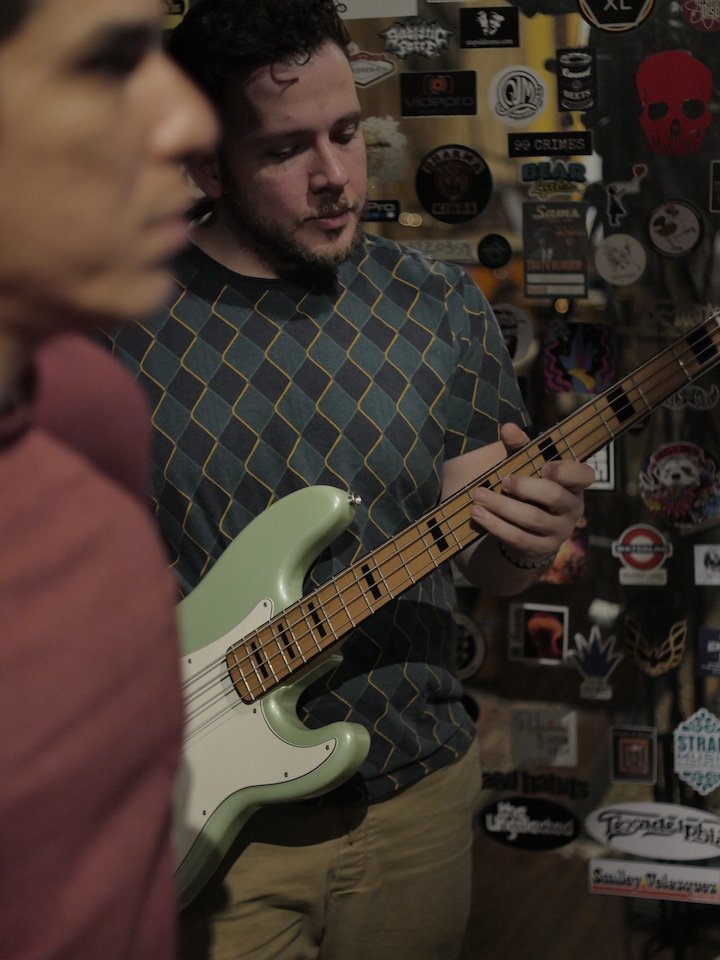
Anything else you want readers to know?
Tomás: With social media and the World Cup, people tried to create this idea that Latin Americans hate each other, Mexicans and Argentines especially. Some people took it too far. But Mexico and Argentina were the two poles of the Latin American music industry. So many Argentine artists went to Mexico and got huge, and so many Mexican artists went to Argentina. We always wanted to show the union of two cultures making something in the United States. Sometimes we speak Spanish and don’t know what the other is saying, because we use so many different words, so we just speak English. A Colombian isn’t the same as a Venezuelan. A Mexican isn’t the same as a Guatemalan. Sometimes we’re all in the same bucket, but that difference makes us more united.
Alex: For this generation, the most important thing is to speak up. I come from a place where it’s dangerous to speak up. But here, it’s really important, especially in this moment. And don’t give up. Just keep doing what you’re doing. When somebody tells me, “Hey man, I see you,” I’m glad I can inspire people. There’s a lot of negativity in this world. I just want to give a message of love, of positivity.
Tomás: Be empowered. Fight. Be mad, but stay positive.
Join Chicoselfie in San Antonio on Nov. 10 @ The Twig Book Shop
Alex Camet and Tomás Volpi join Editor in Chief Mitch Baranowski for a live set and conversation celebrating “Austin’s Music Scene” on Tuesday, Nov. 10, from 6–7 p.m. at The Twig Book Shop, 306 Pearl Pkwy, Suite 106, at the Historic Pearl in San Antonio.
Signed copies of the book will be available, and half of all net proceeds benefit the Health Alliance for Austin Musicians. More details here.
Listen to “A Dónde Llegar,” “Fuego” and “Romántica” on Spotify, and follow @chicoselfie_ for the latest drops.
