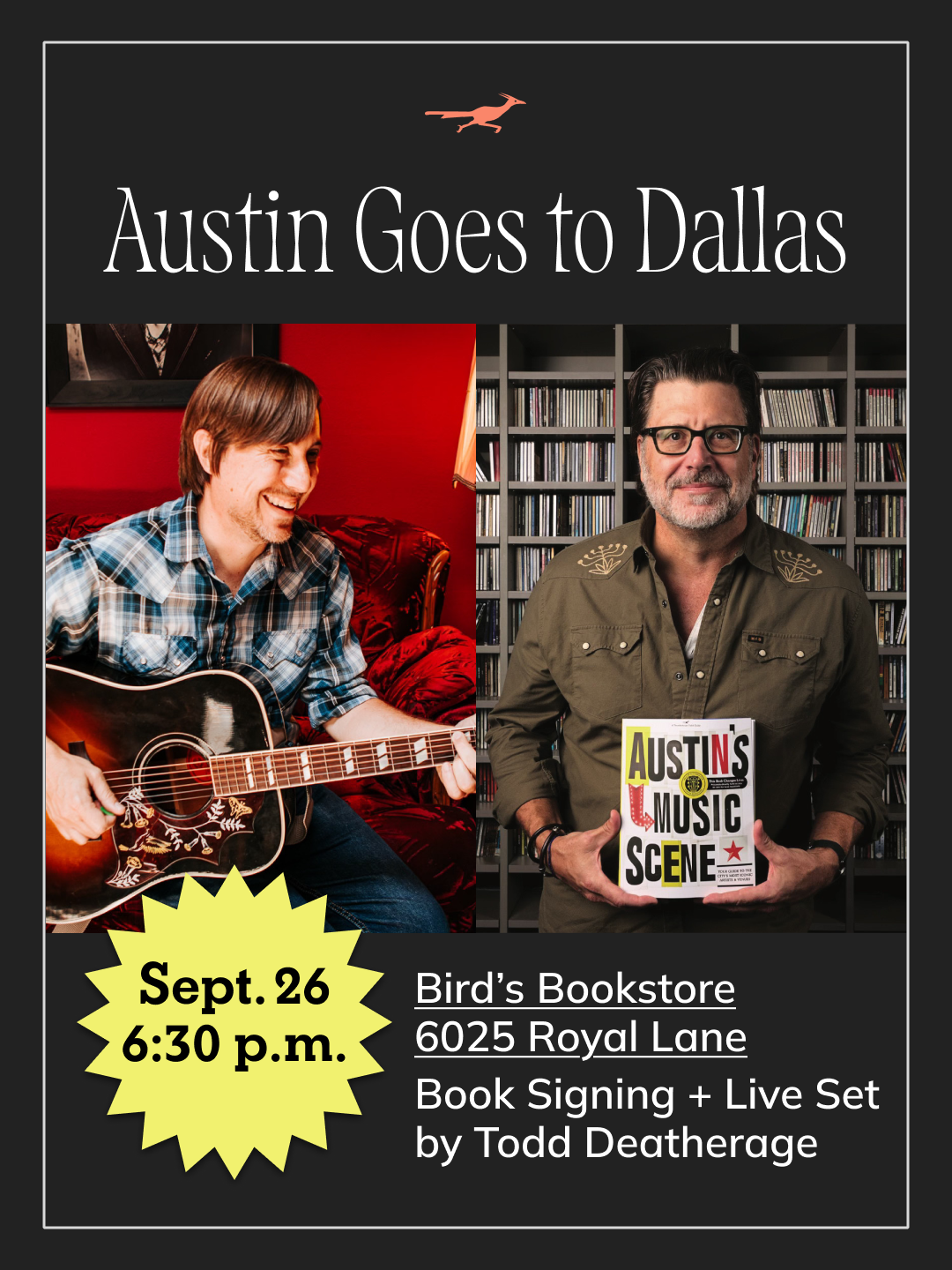
Two-steppin’ in the Moonlight, or How Todd Deatherage Took the Long Way Back to Texas
A conversation with the Merles frontman ahead of their album release party and a Dallas homecoming show to promote “Austin’s Music Scene”
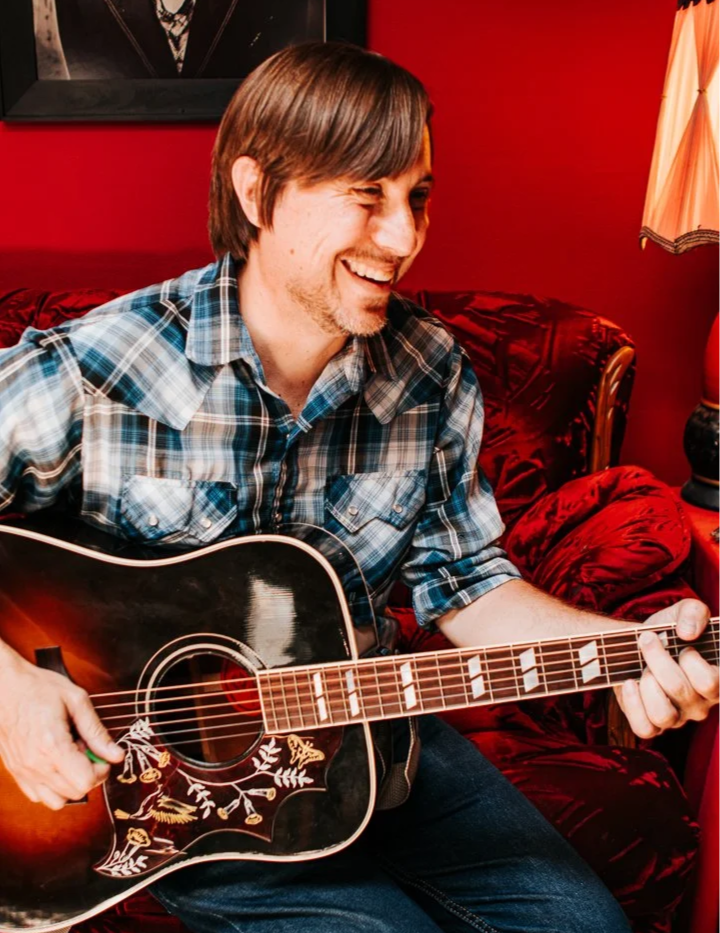
Photo by Crystal Glaze.
Todd Deatherage grew up a few miles from Deep Ellum when it was still a bustling music district in Dallas, learned the blues at the elbow of a mentor who worked a pawn shop, and by his twenties was on the edge of the biggest rock scene in the country—sharing bills, bar tabs and the occasional bad decision with a pre-fame Strokes crew in downtown Manhattan. A UK label deal promised to make him a star and instead cost him his band and his fanbase. But it gave him a hard-won lesson about who actually has your back.
He followed his heart to Ann Arbor and started rebuilding from scratch, touring constantly, eventually moving to Austin with his soon-to-be wife, going to school for music education with a focus on classical voice and opera. And he quietly built The Merles—a honky-tonk outfit born from busking in New York’s Prospect Park—into one of the steadiest working bands in Central Texas. Sixteen years later, with the Merles’ new record “Two Steppin’ in the Moonlight” out September 16, Deatherage is bringing that whole long, strange arc back to Dallas for a performance and Q&A at Bird’s Bookstore on September 26. We caught up with him to talk about his long way home.
Why music? Where did the pull come from?
Music was just my thing. My mom played guitar and ukulele and messed around with the mandolin, and I always really liked it—even when I was four or five, dancing around on the bed with a microphone, pretending I was a performer. In middle school I played saxophone in band, and then I discovered guitar. It was like, “Oh my gosh, this is awesome.” I was about 12. And then girls started noticing, so it was goodbye saxophone and hello guitar. Classic boy story.
I started taking lessons from a teacher named Swafford, and that’s how I met Matt “the Cat” Hillyer—we had the same guitar teacher. We were about 12. He’d do these summer sessions—just me, Matt and another kid named Matthew—learning music theory. We were music dorks. But Matt wasn’t a nerd—he was already playing gigs at 12, dressed to the nines in his rockabilly gear. I remember thinking, this kid is my age and he’s playing gigs! It’s possible. That’s kind of always been Matt’s role in my life: showing me this is something you can actually do.
I ended up auditioning for Arts Magnet as a classical guitarist, but they didn’t really have a classical program, so jazz came in to my life. It’s such a jazz school—and the blues, too. I started going to open jams at 15. Matt was the one who said, “You can go to this.” That’s when I met Brian “Hash Brown” Calway, who became a huge influence—kind of like a second dad. He used to work at a pawn shop, and my mom would drop me off with him so I could sit in and learn about the blues.
You were exposed to a lot of genres early on—jazz, blues, rock, country, classical. Did that make you pretty agnostic to genre?
That’s always been a blessing and a curse. I think in a lot of different genres, and that’s made me hard to pin down. It’s actually been difficult for me to succeed as a solo artist because of it. When I was signed in New York, they had a hard time marketing me for exactly that reason. With the Merles, though, this band is a very specific thing, and that’s made it much easier to package. I still write songs outside of that world—if something works for the Merles, great; if not, it goes into the singer-songwriter pile.
When did the Calways start?
The Calways is named after Hash Brown, of course—an appreciation for everything he taught me. In high school I was hanging around with Matt, who was deep into rockabilly and Reverend Horton Heat, and I remember thinking, you can play guitar loud and crazy? This is awesome. We had a band together for a while doing rockabilly and country, playing every week at Muddy Waters. Then I struck out with my own trio— me, Steve Visneau and Todd Pertll—a raucous little band opening for Reverend Horton Heat and, a bunch, for Old 97’s. That’s how I got to know Rhett Miller, who’s always been such a nice, humble guy despite how famous he got.
We eventually expanded to a five-piece with piano, chasing that late-’90s Wilco Americana sound, and did some touring—opening for David Garza and other Dallas bands at places like Gypsy Tea Room.
When that band dissolved, I went solo. Robert Jenkins—Rhett’s good friend—put out my first record on his label, Summer Break Records, alongside Pleasant Grove, who are still playing shows around Austin today. Rhett sang on my first record, and we wrote a song together, though the label credit only listed his name. [Laughs] Details.
At some point, you went to New York. What pulled you north instead of down to Austin, which is just three hours away and which you say has always felt like home?
Honestly, Austin was hard to break into as a Dallas band at that time. We couldn’t get gigs. Austin had its own scene and didn’t love Dallas bands showing up. New York felt different: Rhett had me open for him at the Fez, and I remember thinking, whoah, this is what could happen up here. That pulled me in.
I moved right before 9/11, and that was the worst day imaginable. But I was lucky in a lot of ways. The Good Bad Art Collective in Williamsburg took in people from Texas, gave you a place to crash and helped you find work. I stayed with a bunch of Dallas transplants there before finding an apartment in Carroll Gardens for something like $325 a month, with a free practice space in the basement. That never happens!
New York at that moment was something I don’t always talk about, because it’s almost too sensational to believe. The Strokes were on the verge of blowing up, and we were playing the same rooms—Mercury Lounge, Brownies, Pianos. We’d built a genuinely dedicated fanbase.
How did the label conversation come together, and what was the pressure like once they wanted to reshape you?
We were recording a record at Avatar Studios—my drummer’s family generously footed the bill—and Elvis Costello and John Mayer were working there at the same time. It’s hard to believe, even for me.
Then a UK label called Lizard King—the label that broke the Killers in America—started circling. And this is where I learned the worst life lesson of my career: don’t listen to record label people. They didn’t like the band. They liked me. They wanted to fire everyone and build a three-piece around me, with a different, more magazine-ready lineup. They brought in Mike Daly from Whiskeytown to write with me, then later a pop producer who’d worked with Brandy and the Gorillaz, trying to make me more radio-friendly.
It gutted the band. My bassist—one of my best friends—got pushed out; we’re still not really close. He’s gone on to play with Solange Knowles now, so he’s fine, but it sucked. So many relationships got wrecked by that deal. Our fans, the ones we’d worked so hard to build, felt like the band they fell in love with was gone, and they left too.
And it dragged on for years—flying to the UK to play for label execs alone, getting compared to Brendan Benson, never quite landing anywhere. Eventually I found out the label owed the Killers a million dollars and never paid anyone—the studio, the producer, nobody. But because I was small potatoes, my lawyer just said, “Get your masters and go.” So I did. Later I put the record out myself as a self-titled EP.
That’s a lot. Those are some hard-won lessons. What’s the advice you’d give a younger artist facing that same pressure?
Never give up on your band. That was the worst thing I ever did. I let people get in my head, pit me against my own bandmates, and I wasn’t as loyal to the people who’d been there from the start as I should have been. Your band members are your first fans. I didn’t have a degree, I didn’t have anything to fall back on. I was broke, working restaurants, a video store, anything to get by—so any promise of “this could be your break” felt impossible to walk away from. If I could go back, I’d have stuck with what we built.
And honestly labels don’t matter the way they used to. I watch these insanely talented younger artists on Instagram and TikTok who can’t get anyone to listen, and they’re all chasing viral. I’d tell them: none of that matters as much as getting out there, making real fans, treating them like friends, learning who they are. It’s not about being the best. It’s about building your family of friends and fans and loving them.
What took you to Ann Arbor?
My girlfriend at the time—now my wife—went to grad school at University of Michigan, and I didn’t want to break up, so I went with her. New York wasn’t doing it for me anymore anyway. While she was in school, I put a band together and toured constantly—21 days a month some months, up and down both coasts. The producer from my New York deal, Damian, had sent me my masters, so I had music to tour on.
When she finished grad school, I wanted to go back and finish my music degree . I’d tried college maybe five times over the years, always chasing a gig instead. So we asked ourselves where we wanted to live, and Austin had always felt like home, so that was it.
You didn’t really know anyone in Austin. What made it feel like home?
I don’t know. Every time I came through on tour, I’d think, this just feels like the right place for me. We moved down, I started playing guitar for other people to meet folks on the scene, and I enrolled at Texas State to study classical voice and opera. It was humbling. I went from being told I was great to getting my butt kicked by 19-year-olds who were so much better than me. But it was exactly what I needed.
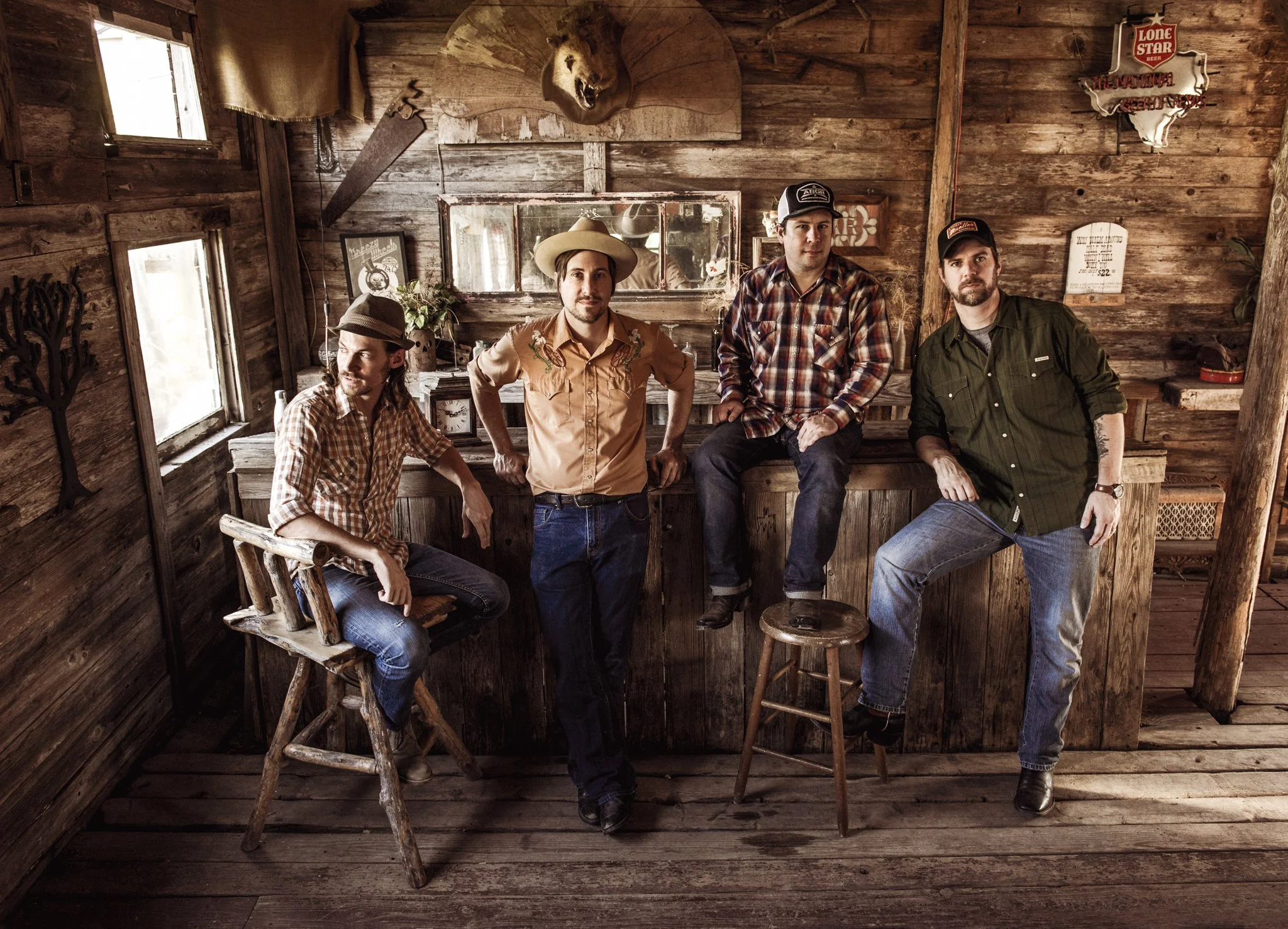
Photo by Valerie Fremin.
The Merles are based here, of course. But they actually started in New York, or had their early days there?
While I was chasing the pop-star thing, there was always this undertone of Texas music and classic country still in my bones. I had some friends—a lap steel player, a drummer, my bass player from the Todd Deatherage band—and we started playing covers just for fun, busking in Prospect Park and around Brooklyn for extra cash, maybe 50 bucks a session.
We didn’t have a name at first. A fill-in bass player one night just said, offhand, “It should be My Brother Merle”—a nod to Merle Haggard, or Merle Travis—and it stuck. It’s not the flashiest name in the world, but it resonated. New Yorkers knew exactly what it was pointing to.
And the Austin version came together how?
I was playing guitar for another band, and the drummer [Matt Winegardner]—who I’d always roomed with on the road—became a close friend. I told him I wanted to put this country-covers thing together, and he said sure. We played Jovita’s as a three-piece—upright bass, guitar, me—and one night Matt just grabbed his snare from the audience and got up on stage. That was 16 years ago, and we’re still playing together.
We cut our teeth at Lone Star Court, Little Longhorn Saloon, and—for longer than I’d like to admit—the dining room at Broken Spoke before finally graduating to the back room. We put out a record in 2017, an EP in 2020, a single with Matt Hillyer, and now the new full-length album.
Great segue. Tell me about the new album.
Matt has run a songwriter group for five or six years—you have to turn in a song every Wednesday or you’re out, one pass a year allowed. It’s intense, and there’ve been some genuinely well-known people in it. I’d always wanted to join, and once I did, I wrote for about two years straight. I’d also always wanted Matt to produce a record—he’s my oldest friend and has shaped my writing, singing and playing more than anyone.
So I brought in my old friend John Pedigo from Dallas, too. He had the band Slick 57 back in the day, and he’s since become a real producer, working with people like Joshua Ray Walker. All three of us have been friends for 30 years. My old-man version of “let’s buy a bar” was “let’s make a record” instead.
I had 20 or 30 songs and we whittled it to 11. We spent about a week in Dallas dissecting and rewriting everything. John has such a way with words, and Matt is brilliant at melody and signature guitar licks. It was a huge learning experience. My drummer came up from Austin, we brought in James Driscoll on bass, and John and Matt rounded out the rest with Dallas players.
We mixed it about five times total. John did a few passes, then my friend Don Cento here in Austin for the final mix. I’m never satisfied. Don’s good at telling me, “Todd, let it go.”
Where should a listener start?
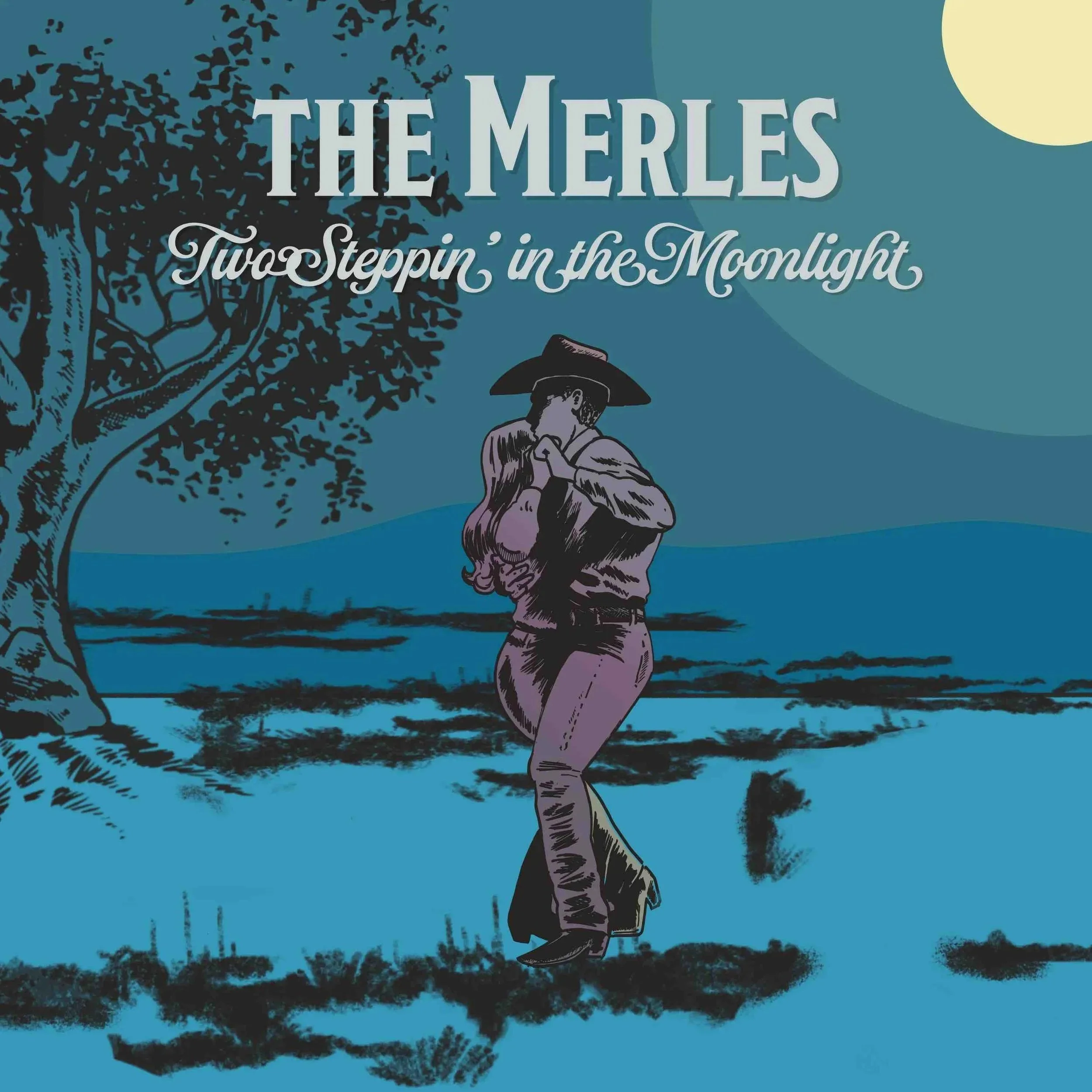
The title track, “Two Steppin’ in the Moonlight”—Matt and John are the most excited about that one, and Matt put a really nice guitar hook on it. It came out of a songwriting-group prompt and just clicked immediately; it’s always felt like the song. The second track, “Too Far Gone,” is about a guy going through a divorce, acting like he’s over it when he’s not. Those two sit right on the edge of Americana and honky-tonk, so if you’re not sure you like country, that’s where I’d point you. The rest of the record leans further into honky-tonk.
Is that persona-driven writing—a character, not you—a technique you use often?
My solo material tends to be more autobiographical. There’s a song on my last record, “Can’t Breathe,” about moving from Dallas to Brooklyn and watching the towers fall. But in the songwriting group, I try to push myself out of my own head, because you can’t write the same sad, autobiographical song every single week.
I also try to write about things that actually affect people our age—divorce, kids, responsibility—instead of pretending I’m still 20. I can’t stand it when a 50-year-old writes like they’re 20. Take Brian Setzer’s “Sexy and 17”—a little creepy then, real weird now.
When’s the release party?
We’re doing the release show September 20 at ABGB in Austin—they do a thing called “Sunday’s Best “with dancers and a full afternoon of music, so we’re turning that slot into a double celebration. My regular lineup will be there: Kyle Kline on bass, Matt Winegardner on drums, Jon Kemppainen on fiddle, piano and high tenor harmonies, and Phil Telford, our pedal steel player, who also plays with Billy Mata and can switch to bass or drums if we need him to. He filled in on bass for us just last week.
I want to be sure to get your thoughts on this whole ecosystem of nonprofits supporting musicians here that a lot of people outside the scene don’t know about.
Austin is so lucky to have that support system. HAAM got me to the dentist for the first time in ten years, back before I had a day job. And through SIMS, I had a wonderful therapist for three years ten dollars a session, sliding scale. He passed away, or I’d still be seeing him.
Being an artist is hard. You get rejected constantly, and nobody warns you for that part—they just say “follow your dream, never stop,” and then everyone steps on you along the way. Mental health support matters enormously. I lost a friend to suicide recently—we went to his funeral last week. It’s a reminder to check in often with yourself, and with each other, and never be afraid of asking for help. We’re getting there, but we need to keep normalizing it.
What’s it like being part of Austin’s music community, day-to-day?
There’s no ego about it. It’s basically all one big band. I’ve had Jake Penrod sub in and lead my group when I was too sick to play. Bob Appel and I trade off who’s leading a set all the time. Everybody swaps in and out. And the songs themselves are actually good—this isn’t Nashville, where you hear “Wagon Wheel” every night. These are songs you genuinely want to play and want to hear.
You’ve lived outside Dallas for about as long as your early years. How’s that feel?
I’ll always be from Dallas—grew up there, still have friends there, and it holds a real place in my heart. I don’t think I could live there again, though. Austin has become for me what Dallas was in my formative years: I’m surrounded by incredible musicians and constant opportunity. I left before I really understood what was happening to that Dallas scene, which is bittersweet. I don’t know that a version of what I grew up in still exists there.
From Big D to New York to Michigan to Austin. Quite a long road to bring you home.
A very long, weird road. I appreciate anybody willing to sit and listen to me talk about it.
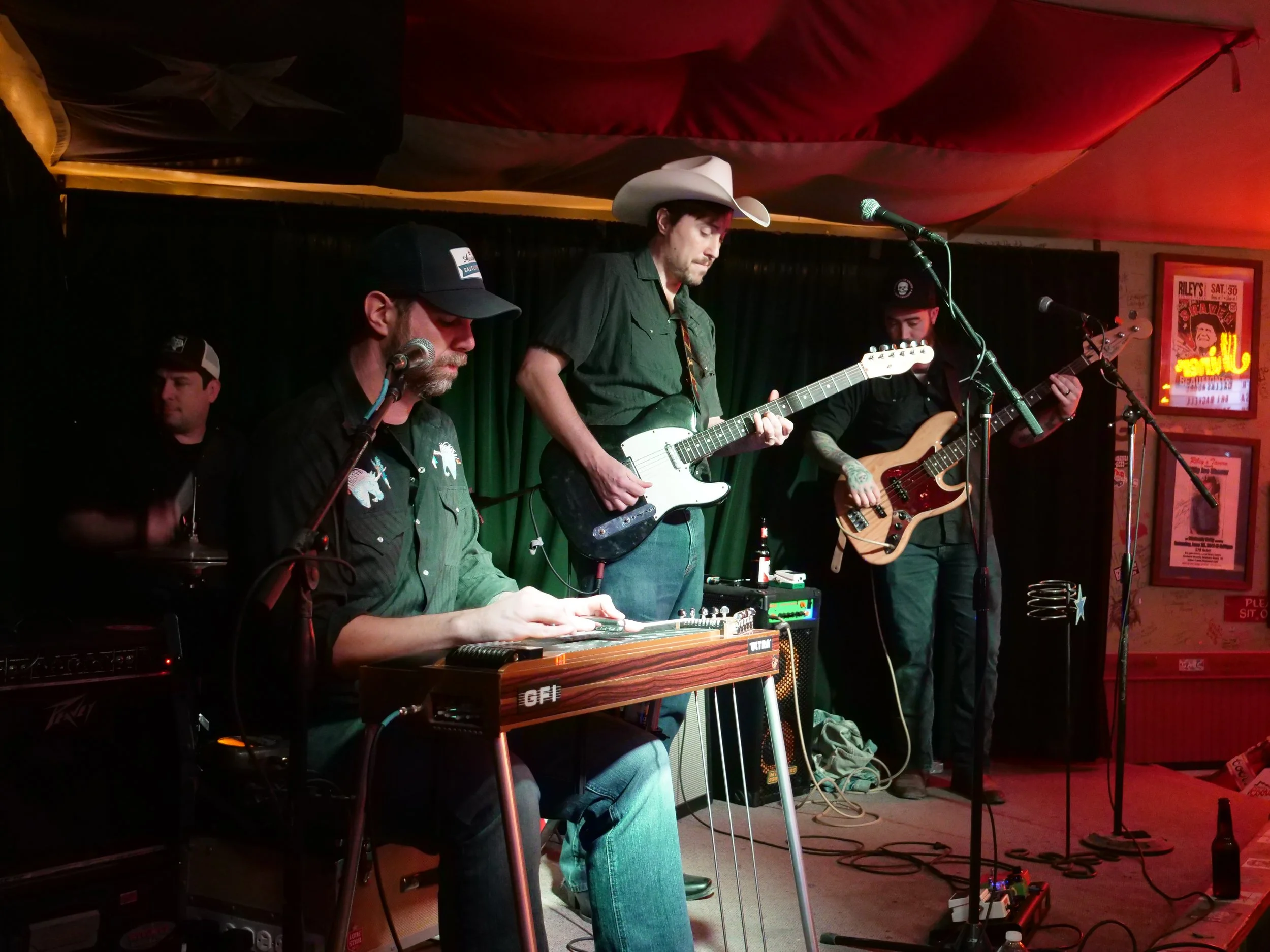
The Merles at Riley’s Tavern, the oldest bar in Texas.