
Cultivating Human Connection Through Song
With her “old soul,” Mélat is quietly driving Austin’s R&B renaissance.
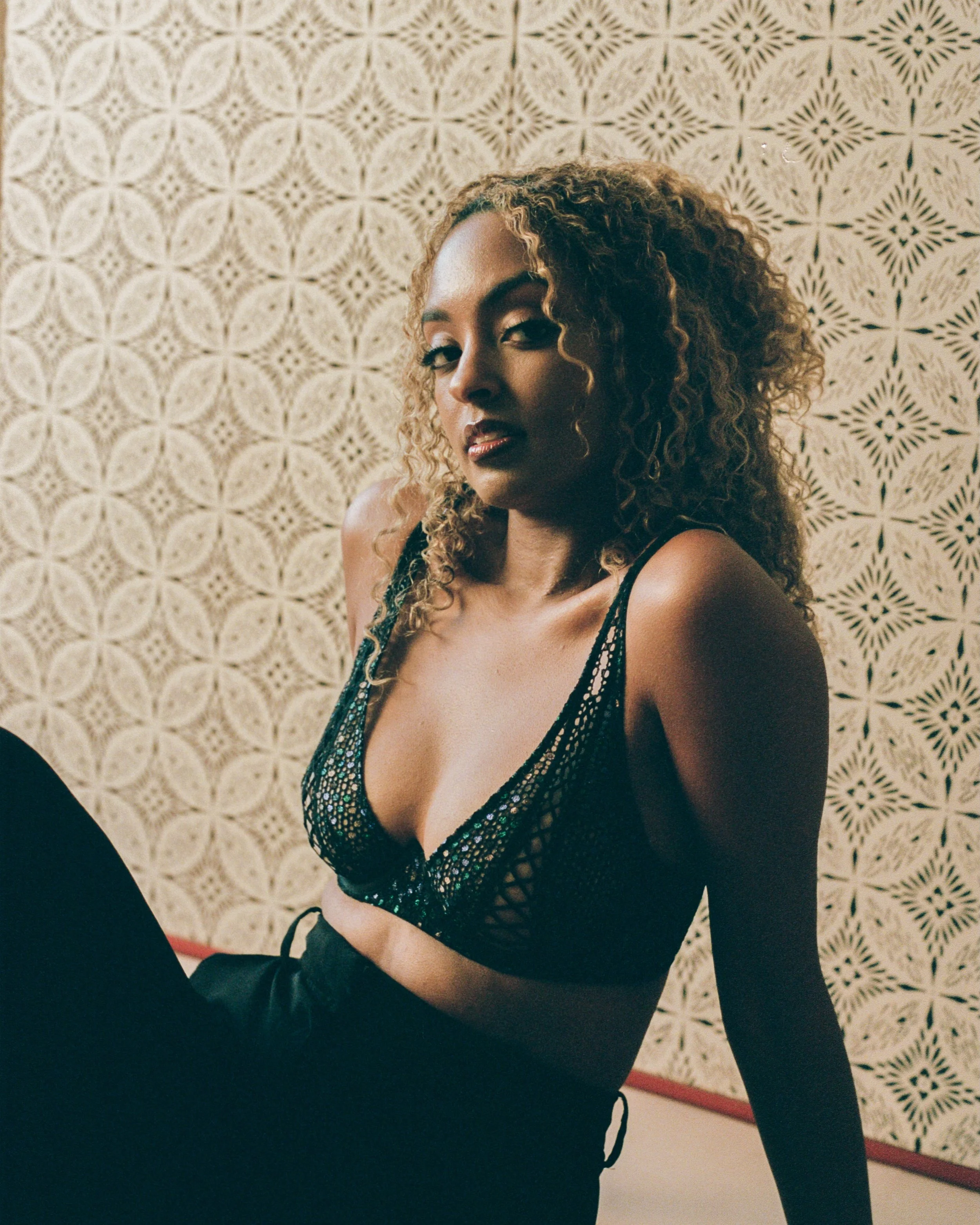
Photo by Rae Mascardo.
When Mélat first started performing in Austin, the city didn't quite know what to do with her. Here was an Ethiopian-American artist making soulful R&B in a scene dominated by other genres. She found herself placed on rock showcases and even nominated for best hip-hop artist one year—despite the fact that, as she puts it, “I cannot rap. You do not want me to rap.” But through persistence and artistry, the Cedar Park High and UT graduate has carved out her own space, becoming a vital voice in Austin’s musical landscape while staying true to her roots in melody, harmony and deeply personal storytelling.
Here’s our full interview:
Let's start with your early days in Austin's music scene. Where did you perform initially?
I actually played everywhere besides Austin before I really played in Austin, which was strange. I played Los Angeles, New York, Dallas and Houston a lot more. I think Austin didn't really understand R&B at that time, and there weren't really any spaces or other people I felt I could turn to who were doing it. When I was playing in Austin, I was on rock showcases, hip-hop showcases. I even got nominated for best hip-hop artist one year, and I was like, 'What? This doesn't even make any sense because I cannot rap. You do not want me to rap. That's not what I do.'
So how would you describe that journey?
It was really trying to get Austin to understand what R&B soul music was. Over time, by continually telling my story, I think it piqued people's interest. Eventually, it started to make more sense. There were other artists coming up at the same time, so the scene was evolving.
How do you classify your sound?
What I make is rooted in R&B—always will be. But I have a deep love of soul music, jazz, Ethiopian influences and pop music, so a lot of that is in there as well. It might not be the cookie-cutter version of R&B that you would most expect, but it is R&B, always rooted in melody and harmony.
Can you tell us about your musical influences?
I'm a bit of an old soul. My number one favorite singer of all time is Ella Fitzgerald. What she went through to be such an incredible artist—I'll never have to experience that because she went through it and opened that door for so many of us.
I also love Whitney Houston, Mariah Carey, Beyoncé, Ariana Grande, Adele—people who sing and you just feel it immediately. I love the Nat King Coles, Frank Sinatra, the Rat Pack era. And then there's Ethiopian music—artists like Teddy Afro, Tilahun Gessesse, and Gigi. I'm not one thing. I never listen to one type of music. I never listen to one language. I love music in different languages, especially languages I can't understand.
How does all of this inform your creative process?
A lot of my music is made in a little silo. I'm not the best at sharing emotions, and writing and making music is very personal. When I do collaborate, I've worked with Xavier Omär from San Antonio, Jansport J out of L.A., and my frequent collaborator Kevin “Pha” Hayden from San Antonio/Austin.
My process lately—I don't know if it was a reaction to the pandemic—but I'll hear a melody or something and just start playing. I play piano a little bit, so I'm usually writing with piano. Melody and lyrics come to me at the same time, which I've found out isn't quite always normal. I put it to some sort of beat and take it to someone who can produce better or play piano better, and we enhance the whole thing.
Do you journal?
My process is journaling, kind of. When I'm writing, it's journaling. Sometimes when I try to journal, it'll turn into a song. That's how I started songwriting in the first place. I'd be rhyming and I'm like, 'Well, this is just what I'm feeling, so let's keep going,' and it becomes more of a poem than a journal entry. Then I'll rip that up or twist it up and shake it up into a song.
The city named a day in your honor—December 14, 2017. What was it like being honored with 'Mélat Day' in Austin?
It was honestly the day where I felt like I had my community behind me. The city reached out and said they'd like to give me a day. They asked me to make up a rule for the day, and it was 'Do good and eat good.' We ate good Ethiopian food, and we donated to an amazing nonprofit that helps asylum seekers, immigrants, and refugees with low-cost or free legal fees. The Ethiopian community in Austin was sending mass emails saying, 'We gotta go support our daughter, our sister.' My family came to City Hall, my band was there—it was a meeting of worlds where everybody from all walks of my life believed in what I was doing.
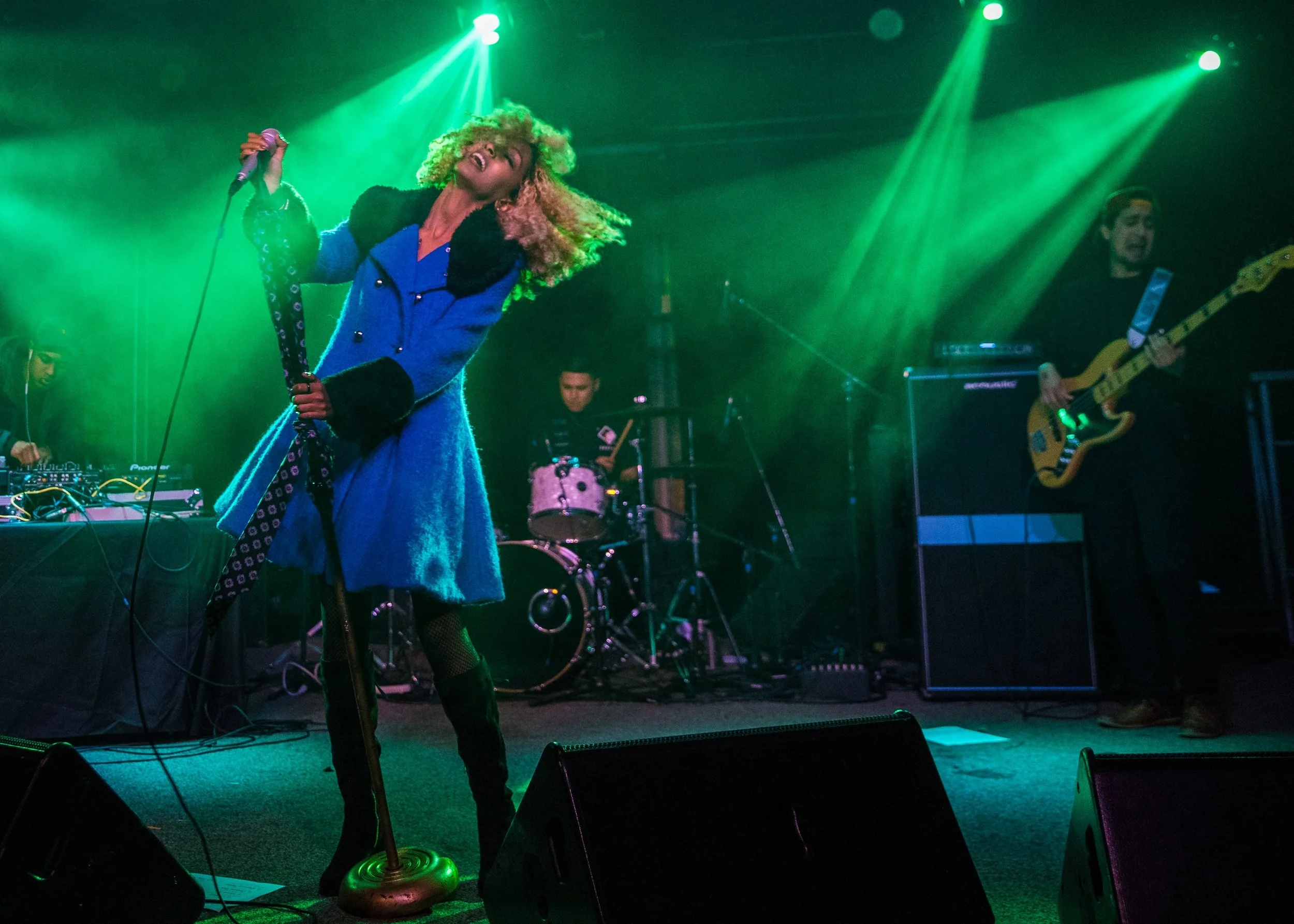
Photo by David Brendan Hall.
Have there been local venues important to your growth?
One of the first places I ever performed was Mohawk. I used to black out completely when I was on stage—I would not know what I did. I feel like I got my sea legs at Cheer Up Charlie's—that was where I finally started coming to while I was on stage and was actually aware and present.
Antone's has some of my fondest show memories—benefit concerts, opening for PJ Morton. Taméca Jones did this show where it was me, her, and Alesia, and that was the first time we felt like there was a show in Austin that catered to Black women making R&B-ish music. It was a really special moment.
The Moody Theater is always a highlight. I opened for Kool & the Gang, and that was the first show my dad ever saw in America—that was full circle. Pershing Hall has been a base for me the last couple years. I've been testing my limits doing stage set design there. C-Boy's—I had an amazing residency and I love being there. The Parish when it was on Sixth Street was another place I cut my teeth. And the Long Center—anytime I perform there, I feel like I've made it to some special level in this city. It humbles me.
How would you describe yourself as a performer?
I would watch videos of the Rat Pack and see how loose they were but also how engaging and connected they were to their audience. It's not just about singing the song—it's about connecting with the audience, making it feel like you're in that room together, having a fun time together.
Growing up as a really shy kid who kept to myself, the stage was the only place where I felt like I could open up. My shows are about having a true connected experience with every person in the room, regardless of the size. I want to sing each song as honestly and genuinely as I can, and in those in-between moments, show how human I am too—that we're all flawed, we're all imperfect, we're all trying our best. We're sharing a moment together, and I'm your captain. This is a safe space for us all.
If someone is just discovering your music, where should they start?
I think two of my most poignant songs are "The Now" and "The Lesson." They lean more soul/R&B. "The Now" is about being present, being here right now. I think the story told in that song, and vocally, gives you a picture of who Mélat is and what she believes.
"The Lesson" starts with 'I don't even know why I want to stay when there's a million reasons to walk away.' It gives you that depth. I wrote it because I was upset, by myself, and never thought it would see the light of day. The first time I tried to perform it at soundcheck, I couldn't make it through—I was just in tears. I barely made it through when I performed it that day. Both songs have had so many people end up in tears.
I'd also add "Affection," which is more Afrobeats, dancey—that pop/R&B vibe with Amharic in it, which is one of the main languages of Ethiopia.
How does a studio recording translate to live performance?
When you're in a studio, you can do another take and hit it with all this nuance. But when you're on stage, it's energy, it's real. You don't get as many takes, so it translates differently. But I love the translation. I love what happens when you take a song you sang in the studio and perform it live because it starts taking on new meaning, and a lot of that is because of the energy transfer with the audience.

Mélat’s latest track, “Cool Summer,” brims with infectious chill vibes.
You just dropped a new track, “Cool Summer.” How did that come together?
It's actually my first non-holiday release in almost two years, which is wild because there was a point where I was dropping a song a month. The whole first verse came to me half-asleep, note for note, and I originally heard it as a full country song—I pictured playing it at The White Horse, two-stepping, the whole thing. Then I heard a Ray Charles record and realized we needed more soul in there, so it landed somewhere in between: soul with a little Texas twang on the guitars. I've always said a song isn't real to me unless it has a key change, and I finally got one in there!
Who played on it?
Jon Deas on keys, Shaan Greenberg on guitar, Eli Menezes on bass, plus harp by Sarah Hall and Justin Hights on drums—everyone brought so much to it. My producer Kevin “Pha” Hayden and I have worked together since the beginning; he's the one who helped me push it from an idea into something fully realized. Shout out to Arlyn Studios and recording engineer Jacob Sciba and Aaron Glemboski for the mix.
What's the song actually about?
It's got a double meaning. On one hand it's a heartbreak song—"This bed is twice as wide without you in it.” But it's also about reminiscing on the good parts of summer. I mean, it still feels like summer in Texas! Probably will until November. Summer is a carefree time with friends and family. I've been playing it live for months before releasing it, which actually helped me figure out the structure.
What’s next? More music coming?
Likely another single in late October, and I'm leaning toward a full album in early 2027. Stay tuned.
What do you want people to know about Austin's music scene?
My whole thing has been: we're here, we're here, we're here. No one ever really believes I'm from Austin. People think I'm from L.A. or New York. They just don't believe that there's this diversity in genre, in music, in person, in Austin. I get it, because the surface of what you see isn't what it truly is. But once you pull on that thread, you uncover so much more and really get to see the richness of what the city is. We're not all just white guys with guitars. They're here too, but we're here too. An Ethiopian girl of immigrant parents making R&B is here, and I'm pretty good at what I do.
Ethiopian New Year with Mélat
Friday, September 11, 8:30 p.m.
Pershing House
Tickets
This is the second annual version of Mélat’s New Year’s Eve party, which celebrates the end of rainy season in Ethiopia. Expect new songs like “Cool Summer,” songs in both English and Amharic, a DJ set after, and Ethiopian coffee and spiced popcorn for every guest. "I want people to feel like they're coming into my house," she says. "That's how we do everything—very community-based."
