
Holing Up at the Venerable Hole in the Wall
General Manager Clayton England tells us why the legendary dive bar is still “for everybody.”
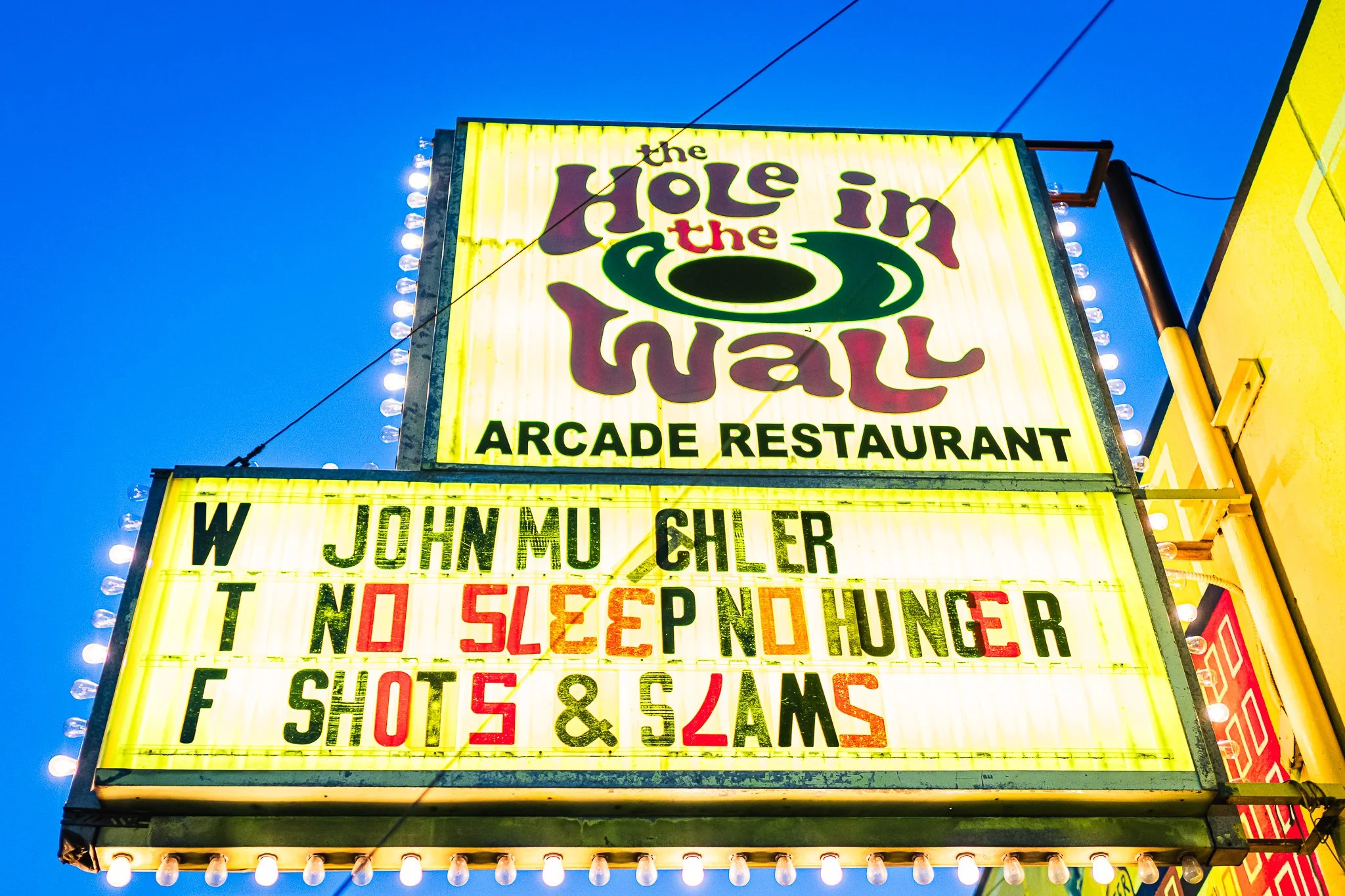
Photo by Jake Rabin
Established in 1974, Hole in the Wall stands as Austin's second-oldest continuously running music venue, weathering gentrification while maintaining its democratic spirit. From Nancy Griffith's early performances to recent punk shows with interludes of queer wrestling, this West Campus institution has evolved from sports bar to cultural cornerstone. Under General Manager Clayton England, the venue now blends history and attitude with innovation—adding Amity's, a coffee shop named after his daughter, and modernizing operations while preserving the gritty authenticity that makes every patron feel ownership of this beloved space.
Photo by Jake Rabin
Can you describe what it means to be the G.M. of such an iconic place?
I'm the operator. I oversee all of the day-to-day business, fiscal responsibility, relations with the city, staffing, all of that. Right now I'm having to fill in. For example, Saturday morning, I'm up at seven, responding to emails. Pick up my daughter at nine, take her out—splash pad, park, lunch. During nap time, I get back on emails. Drop her off at her mom's at 5 p.m., come in here, put out any fires. Then I bartend from 9 p.m. until 3 a.m. and sleep on the couch back here for maybe four hours, then I open up the coffee shop Sunday morning at 7 a.m.
What makes Hole in the Wall different from other music venues in town?
It's still here. That's, frankly, that's a big win—weathering the storm in an ever-changing Austin. We're celebrating 51 years this year. The ripple effects from this place for this city are significant. Former GMs have opened other businesses. Will Tanner, the owner here, catered White Horse's liquor license through us for the first handful of months. The PA came from here over there. The guy who runs sound at Sagebrush—his first job running sound was here. It's all interconnected.
What do you want readers to understand about running a live music venue?
I'm not really in the music business. I'm in the beverage business. Most venues don't make money on tickets—almost nothing. The only way the venue exists is through alcohol sales. And people aren't drinking as much alcohol as they used to. That's why I believe in transparency. Here's what the deal sheet is—ask me any questions. I can break down every cost and show you why this model works and is most beneficial for both of us.
What's the biggest challenge of running this place?
I'm the first GM in a very long time that did not work here prior to running the place. Some of the staff here—Lynn, who you met—she's been here 15 years. Most of the staff has been here over five, some much longer. So stepping into a role with a very tight-knit community and identifying ways to push this place into a more sustainable model has been difficult.
How does the Iconic Venue Fund support affect operations?
We got $1.6 million from the Iconic Venue Fund, which comes in as a rent stipend every month—about six grand, though rent here is $18,500. So don't get me wrong, I'm grateful for Rally Austin and the infrastructure money that fixed the patio, the new PA, electrical, and building up the kitchen. But if you don't change the way a place operates, it's never gonna make any more money. Traditional venue models aren't applicable anymore if you're not attached to Live Nation, AEG, C3, or any subsidiary. They just eat money, and people don't drink as much.
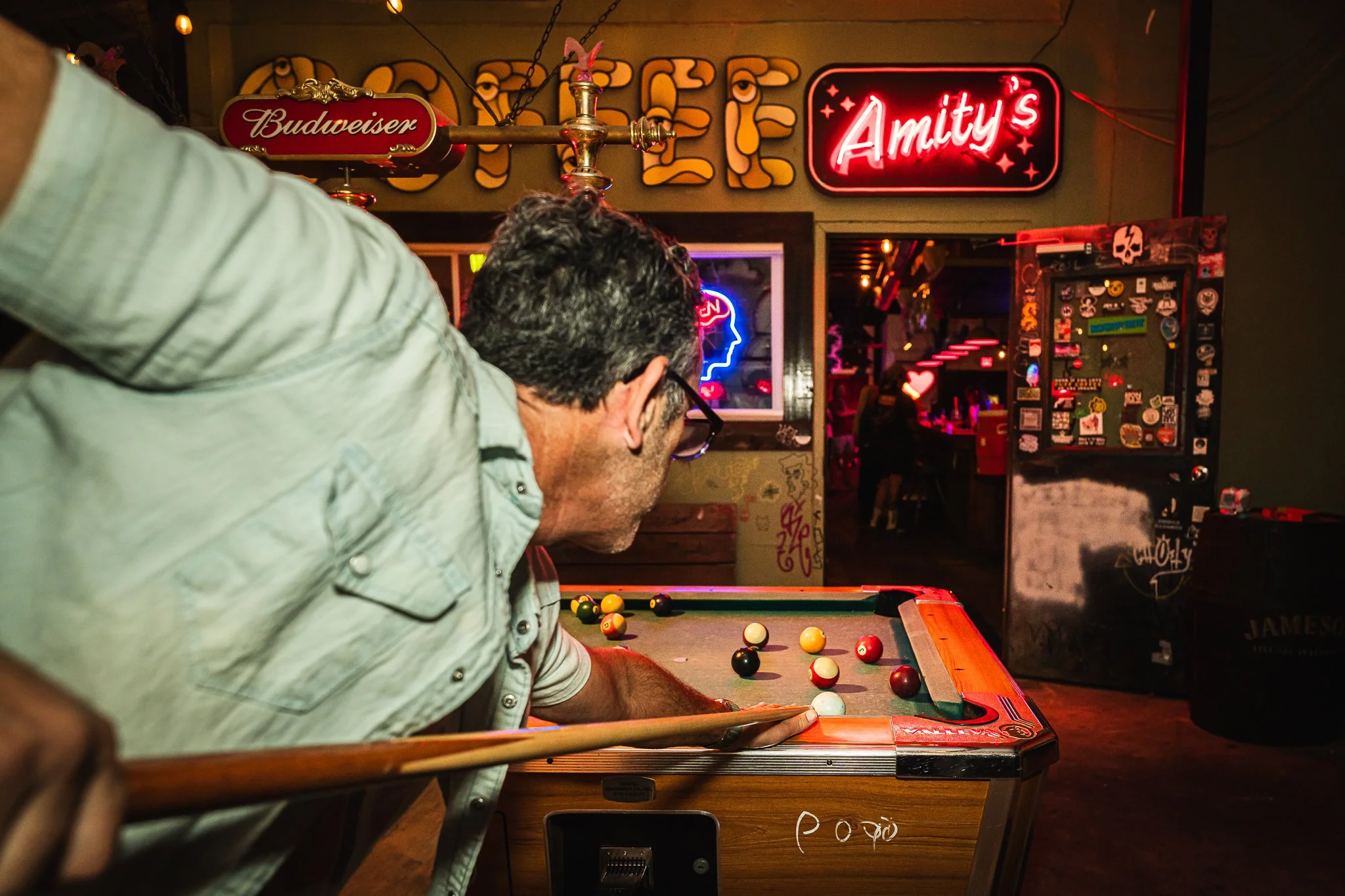
Photo by Jake Rabin
How does the new coffee shop Amity's fit into your business model?
I realized this back space was the weakest part—it's a whole other business. The coffee shop creates alternative revenue streams for doing more arts and culture events. We're across the street from the university—why don't I have 50,000 kids coming in for live music? Well, it's 21-plus and we can't afford the liquor liability insurance for under 21. So how do I capitalize on the population while sustaining the integrity of the culture? Coffee is great, but it's not really about the coffee. It's about creating another way to keep this venue alive. The shop is named after my daughter, with a focus on Austin female music culture—Rosie Flores who started here, Nancy Griffith, Toni Price. It's paying homage to our front space while creating another way to introduce customers to our space and what it means.
How do you think about the venue's brand and positioning?
I think this place has unfortunately just been kind of forgotten over time. People like to tell stories about what it used to be—Townes Van Zandt and Blaze Foley playing on the front stage, Spoon shooting the music video in the bathroom, Courtney Love doing blow and making out with Dave Grohl. That history should be honored. But it doesn't matter if it fucking dies. It's got to be present in people's minds again. So the coffee shop is part of that—leaning into what everybody thinks this place is while having a bigger digital footprint, really connecting as a community partner with KUTX and ACL, being on the music commission. Just putting it back into people's mouths.
Can you describe the venue's layout and what each space represents?
If you think about the front stage, that's the museum—that stage and that bar. The middle stage is kind of like 'I've seen some good stuff, I know I had a great time, I might not remember all of it.' Then the back space, Amity's, named after my daughter with a focus on Austin female music culture—posters of Rosie Flores, Nancy Griffith, Toni Price, specific poster artists who are women—this is what the future of the space looks like. So it's paying homage to what that front space is, while also creating another revenue stream and bringing in a different demographic from the student population.
What should visitors expect when they come here?
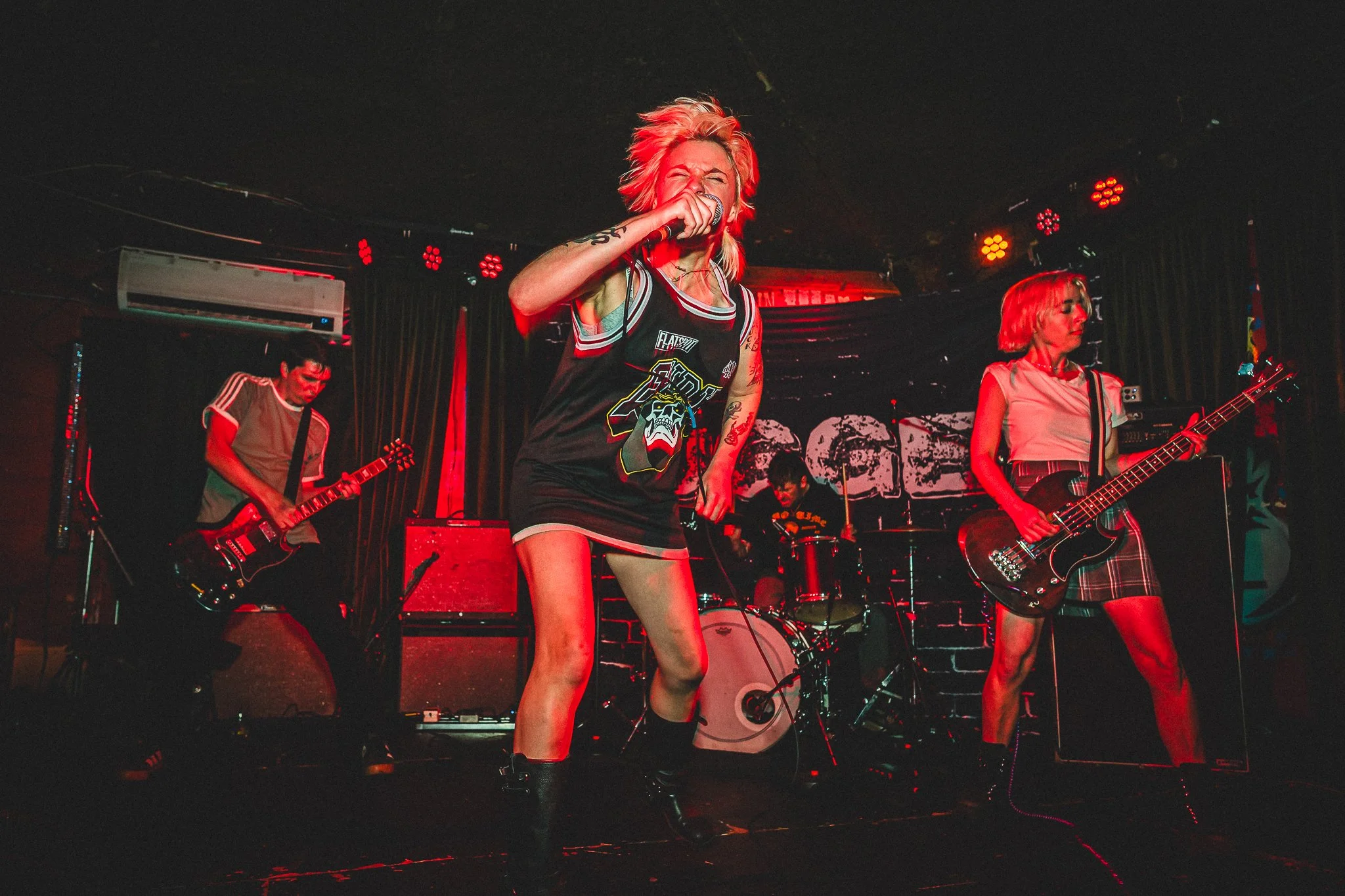
What I love about Hole in the Wall is that it's still for everybody. Ages 21 to 71—the UT professor, the sanitation worker, the city council member, the socialists from campus, punk and hardcore kids and street punks and the old hippies hanging out. It changes every night. So many venues are focused on what their brand is, but Hole in the Wall is a multi-genre venue where you might see five people on a sleepy Tuesday and some kid playing guitar, not knowing whether he's gonna do something beautiful later in life. Then a hip-hop show with 350 people crowd-surfing on boogie boards. Then the next morning you can have coffee and listen to me talk about Austin music history.
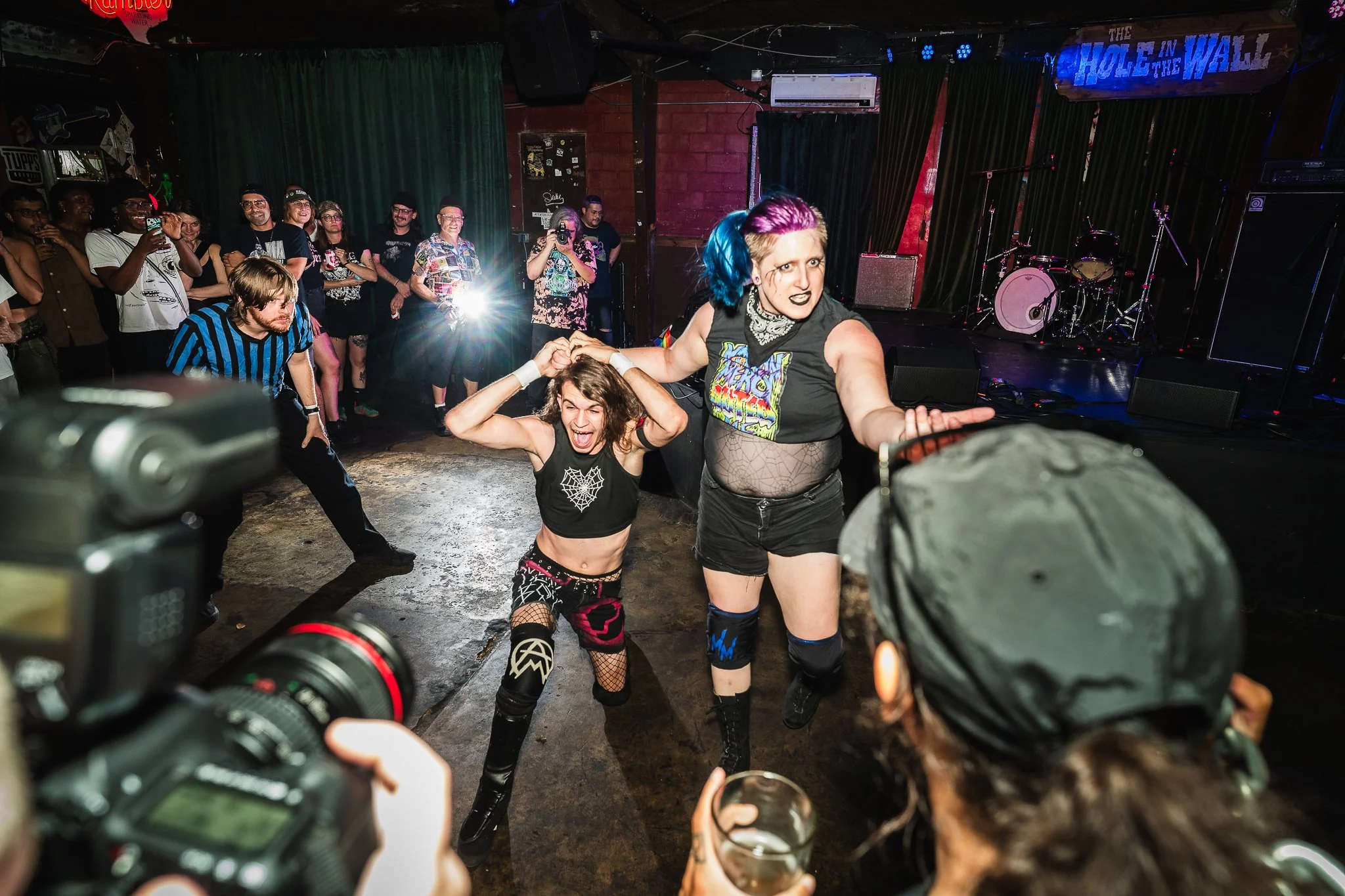
Photo by Jake Rabin
Muggers, Photo by Jake Rabin
What recent artists have come through who represent the venue's ongoing legacy?
Shakey Graves played here early on. Alejandro Escovedo still comes through—that relationship was built when Dennis was the GM. Mike and the Moonpies, who changed their name to Silverado now, Mike Harmer played here. Die Spitz did some of their first shows here and they're blowing up now. There's also Howdy Gals—not an artist but an all-female booking collective. There's six of them, they all work at different venues in town, but they have this underground thing where they book shows and talk to each other. One of them works here for us. They're gonna crush it.
What's your hot take on people who say Austin isn't the same anymore?
There's three different attitudes, right? One is that you just complain about it all the time. The other is you leave and go somewhere else. And the last one is: don't like it? Fucking do something about it. It's the same conversation that happens everywhere, in every city I've lived in. Everybody's like 'I remember New York in the 70s,' 'I remember Chicago in the 90s.' Time doesn't stop. You can't control that shit—to a certain extent. But you can engage if you give a fuck.
What's the best way to support a place like Hole in the Wall?
Just show up. Just be present. These days, it's easier to check something off digitally—'I was there'—but just be present. If you like a band, if you like the space, tell people. Have human connections. That's the whole fucking reason—not the phone and this crap. It's about engagement.
Can you tell me about the soul of this place?
Everyone's got a Hole in the Wall story—the night you had too many, the night you saw Spoon or even Blaze Foley, the night you proposed, your first show, why you moved here. The soul of this place is comprised of all that nostalgia, all those memories. Everyone feels like they have ownership of this space—which chaps my ass trying to get shit done—but you can't say that about a lot of places, where fans from different generations feel ownership. That's really special.
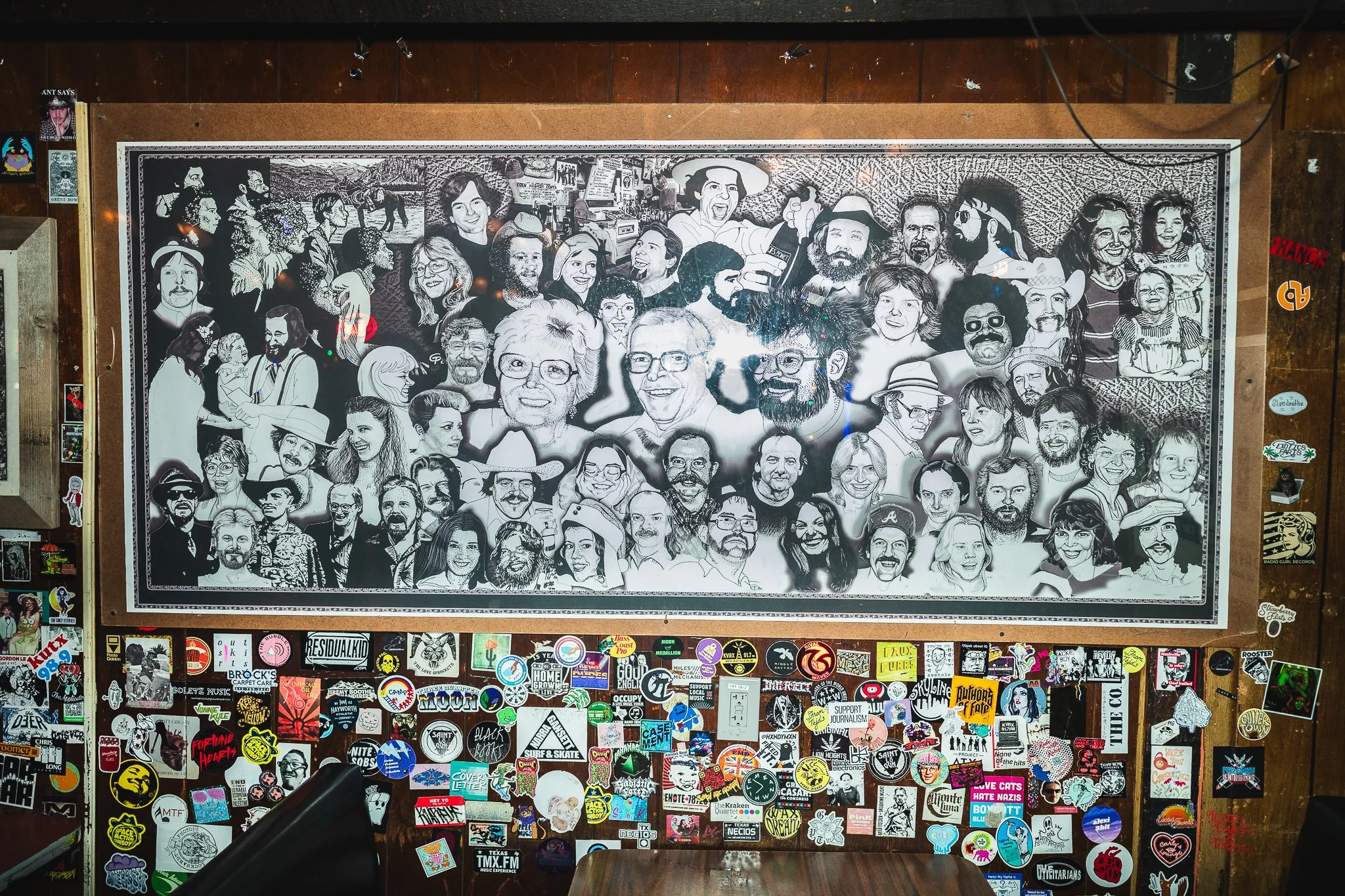
Fun fact: One of the bartenders used to draw sketches of the regulars. You can still see them behind the bar today. Photo by Jake Rabin.
