
Bob Schneider Isn’t Lonely Anymore
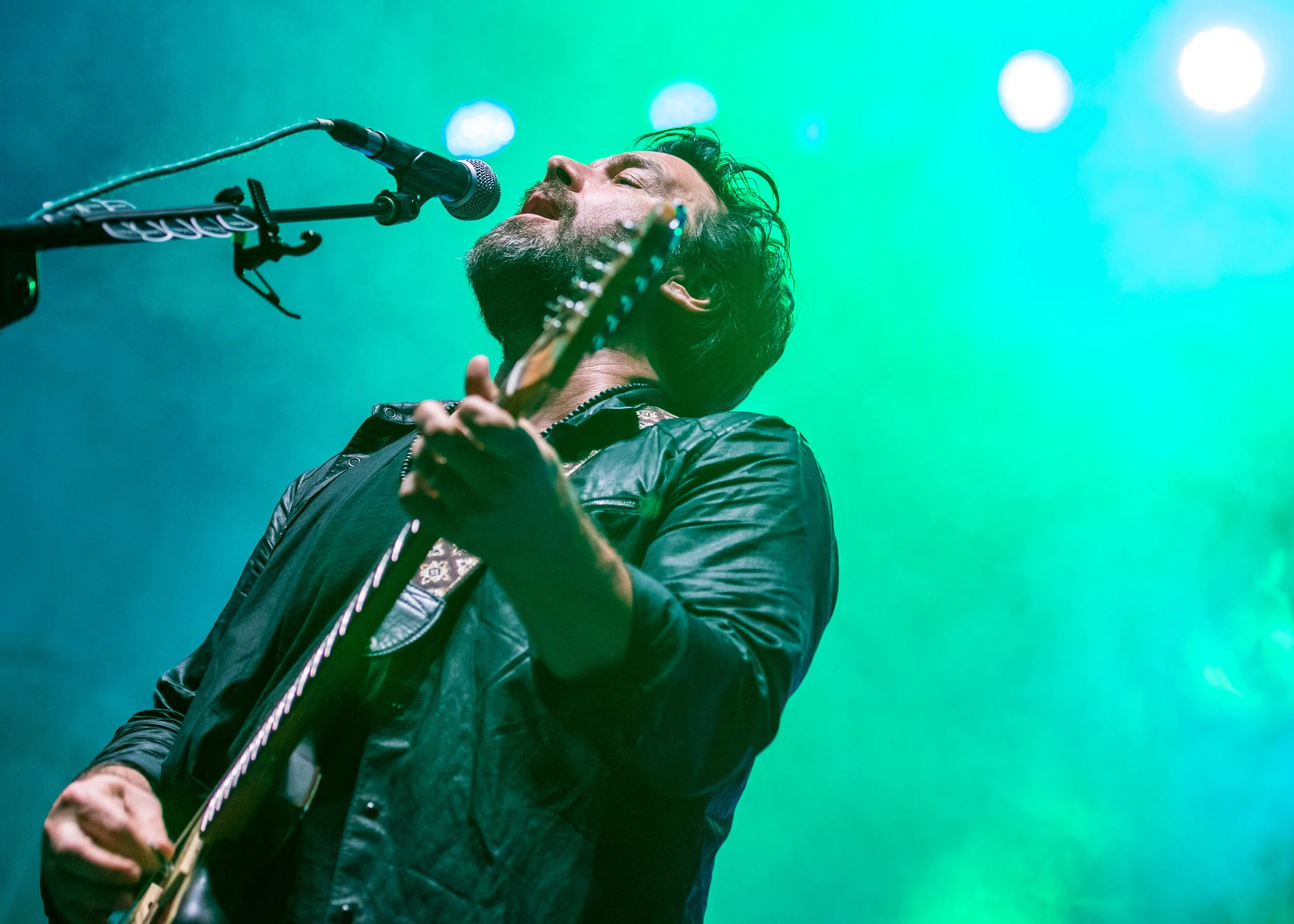
Photo by David Brendan Hall
Bob Schneider has been a cornerstone of Austin's music scene since 1989, evolving from the high-energy dance parties of The Scabs to the introspective artistry of his legendary "Lonely Land" residency at the Saxon Pub. What began in 1998 as a creative outlet for songs too contemplative for his rock band has become one of Austin's most enduring weekly showcases. Schneider's approach to songwriting—fabricating fictional narratives to express genuine emotions—has produced a rich catalog that resonates deeply with audiences. Though he's witnessed Austin's transformation from an affordable haven for artists to a more expensive and challenging environment, Schneider remains committed to the city and its creative spirit, embodying the "Keep Austin Weird" ethos through his dedication to live performance and authentic artistry.
Here's the full interview.
There's this story about you going to Joe Ables at Saxon Pub and saying, "Give me your worst night." Is that story true?
Absolutely. I wanted to do—here's the full story of the residency and how I ended up at Saxon Pub. So I wrote a song called "2002" in 1998. In 1998 I was in the Scabs. Scabs were doing gang busters at Anton's. We were playing every Tuesday night, and we were selling it out. We were playing on the weekends, selling it out. Every place we played, it was just like the place to be was the Scabs.
But at the same time, I'd always written songs on my own, and I just started writing more stuff on my own versus in a band. And I wrote this song called "2002," and I would try to play with the Scabs. And it just wouldn't work because the Scabs had turned into this big party. Like when the Scabs started in '95, it was anything goes, very experimental, Neil Sedaka covers, weird art rock. Rap, heavy metal, just weird "Satan Stole My Tampons b*******."
What happened was we realized, well, if we play dance music, hot women are going to come to our shows. And then if hot women come to the shows, then dudes are going to come to the shows. And then, you know, girls don't want art rock. They want to dance. They want to have a good time. You know, they want to party. So it turned into this big sort of dance party.
And then I would play this song "2002" which I really loved and it would be a big bring down, you know, like no. I was like, "No, we don't want that."
So you needed an outlet for that more introspective material?
I was like, "Well, I got to figure out a place where I can play this sort of introspective singer-songwriter music." So I tried it at Stubb's and couldn't get anybody to come. After two months, I stopped doing it. Then I went to Steamboat and tried to do it there, again on Sundays, and couldn't get anybody to come see me play.
But there was a band called The Resentments that were playing at Saxon Pub on Sunday nights that had Steven Bruton, who I knew. He was like, "Oh, you should come down and sit in." So I came down and played that song "2002" at Saxon Pub during one of those Resentment gigs. And I was like, "Oh, this might be the right fit for this kind of music."
So the next week I went and talked to Joe who was running the club at the time. This would have been '99. And I was like, "Hey, I'd love to do a residency here." And I mean, at the time I was, you know, I want to make a go of it here and give me a residency and see if we can build a business.
And you asked for his worst night?
Yeah, I basically said, "What's your worst night?" And he was like, "Monday." So I took Monday and that's how it started.
Why did you call it "Lonelyland"?
I didn't like my name for a rock and roll artist. Bob Schneider just didn't sound right. So I called the whole project "Lonelyland."
What did having this weekly residency mean for you as an artist? This was the first time you were actually running a band, right?
Yeah, exactly. Before this, I had only been a part of bands, even as a lead singer. I didn't have confidence in my ability to actually lead a band or manage such a project. I just didn't think I could do it. This gave me the opportunity to run a band independently for the first time.
And it led to the "Lonelyland" album?
Yeah, the Saxon Pub residency allowed me to develop as both a songwriter and a band leader, and it led to creating that album. The weekly gig became like a practice space for us to try out new songs, see what worked, improve week by week.
How important is that weekly deadline?
It's absolutely crucial. I had to write a new song every week for my loyal audience who kept showing up. And having that deadline? It's essential for a songwriter's productivity. You have to have a deadline. Without it, you just don't get the work done. You need that pressure, that commitment to other people who are expecting something from you every single week.
Let's talk about Austin. You've been here since 1989. How has the music scene changed?
Oh man, it's changed significantly. The biggest factor is the increased cost of living. When I moved here in 1989, living downtown was incredibly cheap. Renting performance spaces was cheap. Everything was affordable.
What did that affordability create?
That affordability fostered this vibrant scene with numerous live music clubs where bands could actually thrive and express themselves creatively. You could work on your art without worrying constantly about making rent. There were so many clubs, so many places to play. Bands could play multiple nights a week and actually make enough money to survive.
And now?
Now the economics have completely flipped. Clubs take a much larger percentage of the door revenue than they used to, which makes it really difficult for bands to earn a living. You're playing for a lot less money, and everything costs so much more. The math just doesn't work anymore for most musicians.
So is Austin still the "Live Music Capital of the World"?
Absolutely not. That changed 15 to 20 years ago. It's just not true anymore. Many musicians who once lived in Austin have moved to more affordable surrounding areas—places like Bastrop, Lockhart, further out. And even those places are becoming too expensive now. The musicians are being pushed further and further out of the city.
It's not just about economics though, is it? What about the overall atmosphere of the city?
You're right. Austin used to be a very friendly and welcoming town. It had this openness to it, this warmth. But it's become less so with all the new residents. People aren't as friendly as they used to be. There's this edge now that wasn't there before.
What do you think caused that shift?
I think it's linked to a general increase in anxiety and fear that's constantly fueled by news and media. Everyone's on edge all the time. Everyone's consuming this constant stream of bad news and it's affecting how people interact with each other.
Did you make any changes yourself around this?
Yeah, I actually stopped consuming news during the pandemic. Just cut it out completely. And it significantly reduced my anxiety. I realized how much that constant stream of negativity was affecting my mental state and how I moved through the world.
So Austin has lost something beyond just being affordable?
Yeah, it's lost some of that cool, welcoming, friendly atmosphere that made it special. That's what made Austin great for musicians—it wasn't just that it was cheap. It was that it was cool, welcoming, friendly, AND cheap. Those qualities together created something magical. I don't think it possesses those qualities anymore, or at least not to the same degree.
Have you felt this personally?
Definitely. My own local notoriety has decreased significantly in the last 15 years. New residents are often unfamiliar with my work. People move here now and they don't know the local music history or the local artists. They're coming here for tech jobs or whatever, not for the music scene. It's a different crowd with different priorities.
What would you tell young artists who are thinking about coming to Austin to pursue music?
Honestly? Young artists seeking to pursue music might want to consider moving to cities like New York instead. Despite being expensive, New York has a legitimate music business infrastructure—real labels, real managers, real industry. Austin doesn't really have that anymore, or never really did to the same extent.
So what was Austin's appeal before?
Austin's appeal for musicians in the past was that unique combination—it was cool, welcoming, friendly, AND cheap. All four of those things together. That's what made it work. Take away the cheap part, and you're left with a city that's still somewhat cool but doesn't have the music industry infrastructure of New York or LA. It's a tough proposition now for a young artist trying to make it.
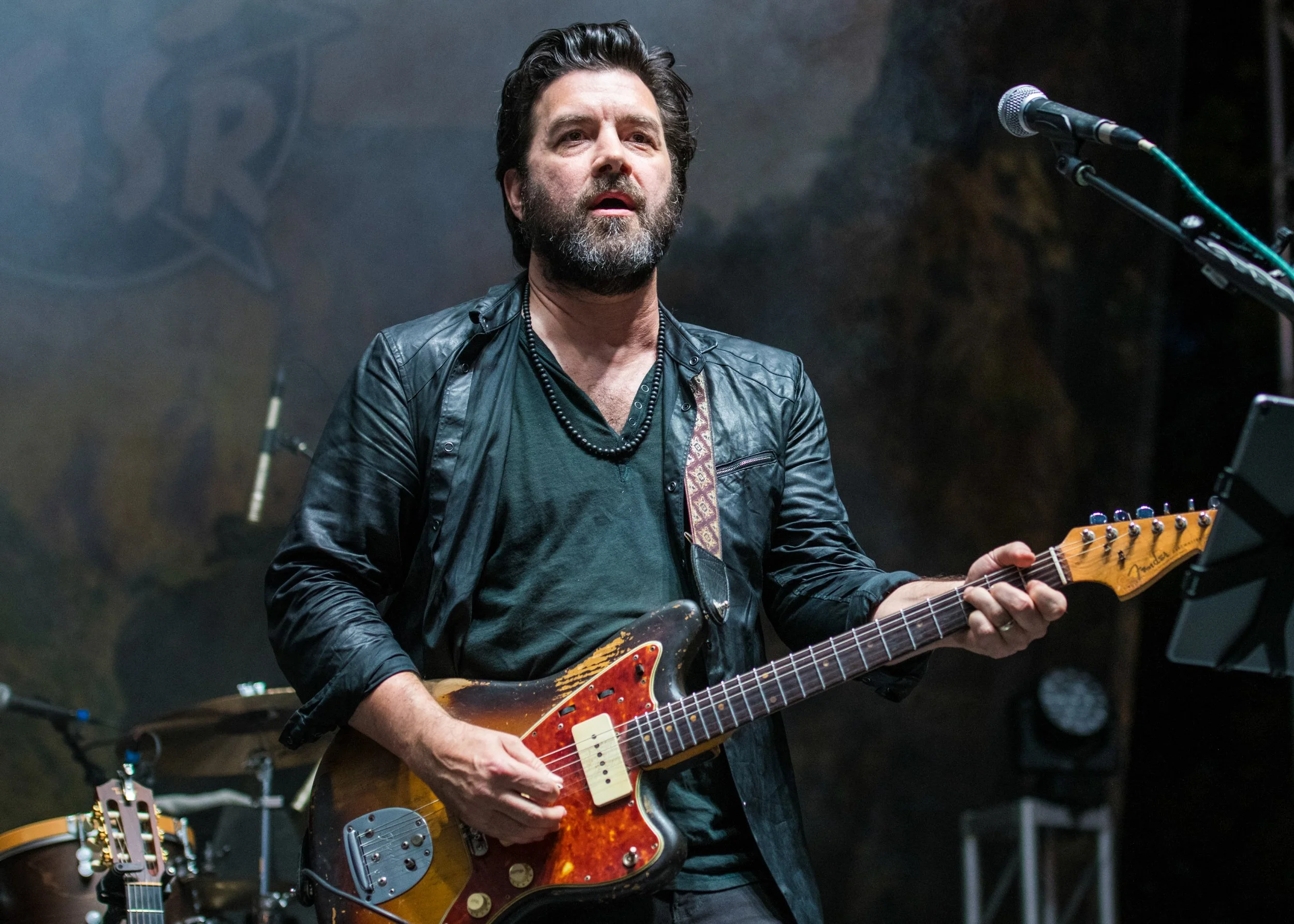
Photo by David Brenda Hall
Let's shift to your creative process. How do you approach songwriting?
I don't write autobiographically, at least not in terms of specific details and literal events. I prefer to fabricate stories to express my emotions. It's more effective for me that way.
Can you give me an example of what you mean?
Sure. Creating a fictional narrative—like a polar bear searching for an iceberg—allows me to convey complex feelings like sadness or fading love or loss more effectively than if I just wrote directly about my own specific experience. The metaphor, the story, the fictional element helps me get at the emotional truth in a way that straight autobiography doesn't.
Why is that more effective for you?
I find myself uninteresting, to be honest. My actual life, the details of it—it's boring to me. So I prefer to write from the perspective of others or about fictitious subjects, fictitious characters, made-up scenarios. But here's the thing—I'm still expressing my true feelings through these invented characters and situations. The fabrication actually helps me get at the emotional truth. It's a way of being more honest, paradoxically, by making things up.
Despite all your criticisms of how Austin has changed, you're still here. Why stay?
I still love Austin. It's like... you know the "Real Housewives" who have had all this plastic surgery? I remember the city in its "young and hot" prime. I have those memories of what it was. And even though it's changed, even though it's had work done, I still think Austin is cooler than most places, even acknowledging all its current challenges.
So you're committed to staying?
I want to remain here and embody the "Keep Austin Weird" spirit. My long-standing Monday night residency at the Saxon Pub reflects this commitment. I'm going to be one of those people who stays and keeps that spirit alive. Someone has to, right? If everyone who remembers what Austin was leaves, then it's really gone.
The pandemic forced you to take a break from that residency for about a year. How did that time off change your approach?
Yeah, we were off for a whole year. After that year-long hiatus, my approach to the Saxon Pub shows changed significantly. I came back with a completely different perspective.
How so?
I now prioritize providing a "nice show" for the audience. I don't mess with them anymore by incorporating experimental segments or really lengthy instrumental jams or weird detours. Before the pandemic, I might have done that—tested the audience, challenged them, taken them on these weird musical journeys just to see what would happen. Not anymore.
What changed in you?
I value the audience's presence now in a way I didn't before. I recognize that their attendance means something to me. The fact that they're there, that they came out on a Monday night to see me play, that they've been coming for years in some cases—it matters to me in a way I didn't fully appreciate before the pandemic. When you lose something for a year, when it's taken away, you realize what it means to you. You realize it's a gift.
What does live music mean to you at this point in your career?
You know, much of the music produced anywhere—Austin, New York, wherever—might be "crap" objectively speaking. Not everything is great art. But the experience of live performance transcends the quality of the songs themselves. Being in a club, immersed in that energy with other people, feeling the vibrations, the heat, the sweat, the collective experience—it's powerful. It can be life-changing, even if the music itself isn't critically acclaimed or particularly sophisticated.
Where do you see that magic happening these days?
That phenomenon of visceral, transformative live music was prevalent in Austin in the 80s, 90s, and early 2000s. You could find it almost any night of the week in multiple venues. But now it's rare. It's confined to these obscure pockets. You really have to seek it out. It's not just happening everywhere the way it used to.
What creates that magic when it does happen?
The magic lies in this specific combination: a small, intimate venue, a quality artist who's committed to what they're doing and present in the moment, and an engaged audience that's really there—not on their phones, not distracted, but actually present and open. When all those elements come together, something transformational can happen. It's alchemy. But you need all three elements.
Does music still move you the way it used to?
I'm not easily moved by music anymore, honestly. Maybe I've heard too much, played too much, been around it too long. But when I am moved—when something really gets to me—I feel proud to be human in that moment. Those moments of profound musical connection are rare, but they're deeply meaningful when they happen. They remind you why any of this matters, why we do this.
What do you hope people take away from experiencing your music, whether at the Saxon Pub or anywhere else?
I just want to give them a good show. I want them to feel something, to have an experience, to be present for those two or three hours. In a world where everyone's anxious and distracted and worried about everything, if I can give people a space where they can just be in the moment and feel something genuine—whether it's joy or sadness or nostalgia or whatever—that's enough. That's what I'm here for. That's what the Monday nights are about. Just showing up, week after week, and creating that space for people.
