
Gina Chavez On Forging Her Own Way Forward
The award-winning queer Latine artist discusses growing up in Austin, the scene’s strong community and a music industry that doesn’t quite know what to do with her. Interview by Rachel Joy Thomas.
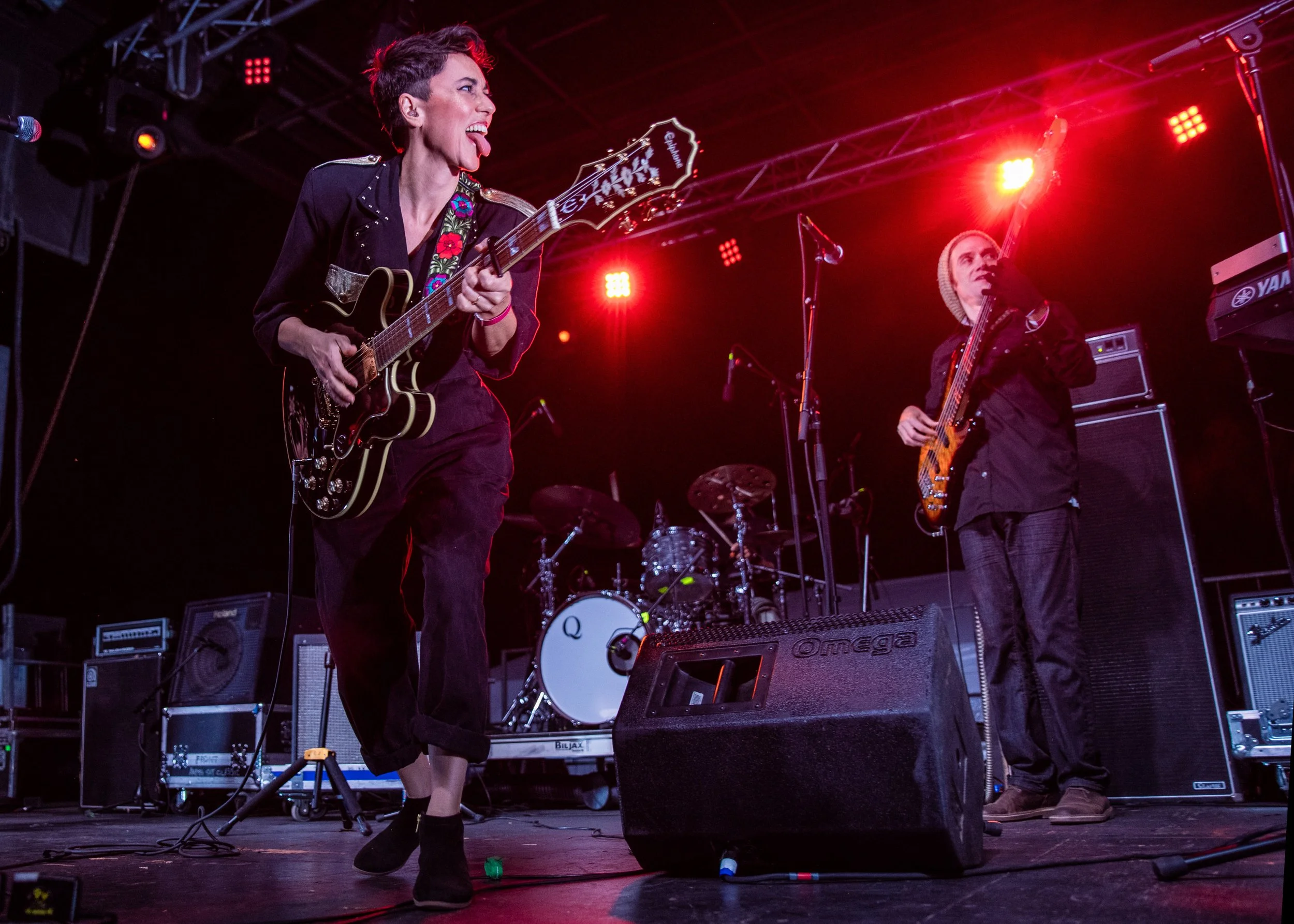
Photo by David Brendan Hall.
A close read of bilingual singer-songwriter Gina Chavez’s origin story reveals a humble yet auspicious beginning. She picked up the guitar at the age of 18 and over the next two decades worked her way from small rooms to NPR’s “Tiny Desk Concerts.” Along the way she garnered 16 Austin Music Awards, did a PBS special and toured a dozen countries. Her Latin Grammy-nominated album, La Que Manda, is the story of a woman coming into her own power. A journey she continues today.
As a Latin Grammy nominee and the president of the Texas chapter of the Recording Academy, Chavez has used her platform to discuss identity and the gaps currently facing bilingual artists. Outside of just her musicianship, Chavez has also served as a cultural ambassador for the U.S. State Department, and started a college fund for girls in El Salvador.
In our 2025 sit-down, she defined herself as being in a “seeking phase” — open to philosophical questions and still charting her own way forward, one deep conversation at a time. Here’s the full take.
Austin has been a huge part of your story. Can you describe some of your earliest memories playing music in this city?
I was born and raised here in Austin. Oddly enough, I wasn’t really involved in the music scene until, I’d say, college. I have memories of going to Aqua Fest as a kid; my parents actually used to help run a stand down there at Zilker Park. So I definitely have memories of being around music here. But my first concert, without my parents, my brother and I went to go see Third Eye Blind at Liberty Lunch. That venue was kind of an Austin staple back in the day. I was 16 then.
I picked up a guitar at 18. I’d actually seen Toni Price at the Continental Club and decided that night! I was like, “Hey Dad, don’t you have a guitar?” So I picked up a guitar.
I used to play a lot at a place called La Tazza Fresca, which was on 38th and Guadalupe, I believe. I would play the coffee shop. You just go sign up, it was like an open mic kind of thing. And then there was an open mic night that happened at Cactus Cafe. So those were my early spots. I was a journalism major at the University of Texas around the time I picked up a guitar and started writing songs. So I grew up here in Austin, but I didn’t really grow up embedded in the music scene like a lot of Austin musicians did. I came a little late to the party.
What other venues or spaces from your earliest memories are still around?
A big one for my career was Momo’s, which doesn’t exist anymore. It was above Katz’s on Sixth Street. But Momo’s was really where I started to develop a fan base and play regularly. It’s sad those venues aren’t here anymore, but it’s also, it’s change, things come and go, and I think there are new venues that have come to fill those spaces.
There was also this thing called the Ham Jam that was really cool. There was this guy, Darren (I don’t even know his last name). He lived in West Austin and he would host these parties. I’m trying to remember if it was every Monday or once a month. And basically the idea was that you’d come and there would just be jams all over the house. I think it became known as the Ham Jam because he would always order a big honey-baked ham. To me, it was a really cool space because it encapsulated what I think is the best of Austin: this idea of a music community, how the community supports the musicians. As I’ve toured and visited other music cities, I think that’s kind of the gold in Austin, that we don’t feel like we’re in competition with each other. At least that’s how I feel. I’ve never felt like I’m in competition with somebody. There’s a healthy rivalry, in the sense that you go see a band and you’re like, “Oh my God, they’re so good, I have to up my game.” But it doesn’t feel like you’re fighting for space or airtime. I’ve heard in other music cities it can be more cutthroat, and I don’t feel like we have that here, and that’s something I would love to preserve.
You mentioned you started writing songs at 18, what was that experience like? When did songwriting and live performance start to come together for you?
It was actually my first boyfriend. He was a really great guitar player. We met near UT, at this place they used to call “the co-ops.” They’ve literally just torn it down. My parents actually went to the University of Texas, and they used to go to parties at these co-ops, there were like six houses, right across from Kinsolving, right across from Kerbey Lane on Guadalupe. Three of them were co-ops, three of them were dorms. I lived in one of those houses.
Anyway, my boyfriend, before we got together, was this great guitar player, great musician. And I think he was really instrumental, pun intended, because he was a very high-level musician, kind of my point of reference. So I was a baby guitar player, and I was like, oh okay, that’s what you do. And I think I got relatively good relatively quickly, because I had this person who was really good. He didn’t really teach me anything, I just saw it.
Not going to lie, I was actually just too lazy to learn other people’s songs. I started trying to learn a cover song, but I was so new at guitar that I couldn’t change chords fast enough. So I was like, well, I’ll just write a two-chord song with the chords I know. I think it just came naturally to me.
I also did a lot of praise and worship at the time. I grew up Catholic and was very involved in my youth group in West Austin, so I kind of cut my teeth on very easy praise and worship songs. And then I started writing my own songs. For instance, I was a journalism major, and my beat was homelessness. Since the [college of communication] was on the Drag, there were always people to talk to. So I would write a series of stories, and then those started turning into songs. So I’d have the articles, but then I’d also write a song about something that inspired me around homelessness.
I would play Mozart’s Cafe. And there was this one song; I had gone and done a study abroad in Argentina, and I came back and wrote probably one of the fastest songs I’ve ever written. I wrote it in Spanish, and it’s the only song from the early years of my career that I still play live, because it just goes over so well with the audience. It’s called “Brujo,” which means witch or sorcerer. I remember playing this gig at Mozart’s, and I have this one song in Spanish, and multiple people came up to me during a break and were like, “Hey, do you have more of that flamenco stuff?” And I said, “Yeah, but it’s not flamenco.” But it was interesting, because I think doing those early gigs allowed me to see what audiences liked. Here’s a mostly English-speaking audience, and the song that they asked about is the song in Spanish. Well, I like writing in Spanish, so I’ll do that more.
How did building your career here shape your identity as a bilingual artist?
I think it’s been good and bad. On the good side, it allowed me to stand out, and so maybe be a big fish in a small pond. On the other side, there’s less of a community around that music.
Latin music is basically just music in Spanish or Portuguese. It’s not a genre. You can have metal in Spanish, you can have rock in Spanish, all of the genres that we have, you can have that in another language. So “Latin music,” in and of itself, is kind of a weird term. It’s basically just, oh okay, they’re singing in Spanish. So nobody really knows. When people ask, “What kind of music do you play?” I’m always like… I don’t fit any boxes nicely. I’ll still say it’s kind of like Selena, and they’re like, okay, cool, they have some reference. But I also sing in English, and I also sing stuff that has nothing to do with Latin music or singing in Spanish. So it’s an interesting place to be.
Austin definitely helped form me. I didn’t hear the kind of music I wanted to play. Without really knowing it, I started to fill a void that I wanted, and I don’t know that that void has ever really been filled.
It seems like, considering how big Latin music is becoming, there’s not enough classification or understanding of genre within the industry.
That’s one thing I’ve run into. I’m on a different side of it now; I’m an independent artist, in every sense of the word. I did work with a booking agent for about seven years, but at this point we’ve parted ways, so it’s literally just me and my wife. No label, no management, not because I don’t want those things, but because being a bilingual artist, there’s not really an industry lane for that.
Grammys are a great example. I put out a bilingual record called “Up.Rooted” in 2014, and I wanted to submit it for the Grammys and the Latin Grammys. I talked to all these people within the Grammy community trying to understand how they determine if something is 51%, that’s the determination: if it’s 51% rock, okay, it’s a rock record; if it’s 51% in Spanish, it’s a Latin record. So I’m like, well, if I have a bilingual song, how does that get decided? If the chorus is in Spanish, does that weigh more? I never could really get a good answer, until I became the president of the Texas chapter of the Recording Academy and got very involved in the Grammys. From the inside, I started to see that song titles matter. People would flip over the CD, see a bunch of English-language song titles, and be like, are you sure this is a Spanish record?
So I was like, oh okay, song titles matter. I started to get some unofficial information. But anyway, they rejected my first record from the Latin Grammys. So when I wrote “La Que Manda,” I was like, okay, well, I’m going to write a Spanish-language record, so they can’t do that. On some level, I purposefully made that record with the intent of having it qualify for the Latin Grammys, and lo and behold, we got a Latin Grammy nom, which, of course, doesn’t happen every time you do that, but you kind of have to learn the rules to play the game, no matter who you are or what you’re doing.
Nobody really knows what to do with me. It’s not that I don’t want a manager, it’s not that I don’t want these things; it’s that I haven’t found a person who can come in and say, I understand the breadth of what you do, and I can make that happen. So I end up training whoever I’m working with: okay, they know the English-language side, here’s the Spanish-language side. There’s just not really a lane for bilingual artists.
I think music is a lot more like a bird flying than it is like a plane flying; birds don’t care about the boundaries we set. A bird’s song isn’t a three-minute song with a chorus and a hook. Our understanding of music is very limited, and I think musicians hate the question “What kind of music do you play?” because, I just play what I want to play.
What do you think Austin could do to create more avenues for artists like bilingual and Latin American artists?
That’s the question, right? I feel like so much of it, and this goes for really any entity, any industry, and I think we’re seeing it right now on a kind of macro, systemic level, is that our systems are not serving us the way they should. And I think a huge part of that is, when you really get down to it, it’s often very homogeneous who’s at the top of whatever industry you’re talking about. When you don’t have diversity at the tables that are deciding things.
If you really look at who’s running whatever record label, or these huge booking agencies like William Morris, CAA, who’s at the top of those things? Probably white men, right, who are really controlling what’s happening. There’s even been a study on the music that we listen to; you look at actual breakdowns of songwriters, and even on huge hits put out by female artists, when you break down the songwriters on those songs, only about 5% of the songwriters in popular music are women. So we’re getting fed music by men. Men are booking us. I’m not saying there’s not women doing some of the work; it’s more that when you really look at who’s calling the shots, it’s a very homogeneous set of people. And until that changes, the lanes aren’t going to change, not because there’s not enough of a market for what I do. Actually I think there is a market, because people like it. It’s more that there’s not enough of a way to make a ton of money, I guess. So there’s not a lane, right, there’s not a lane for me to fit into.
Part of what I’ve learned at this point in my career is, I’m actually kind of glad I’m not stuck in the lanes. I always tried to fit into these things, and I was like, “Oh, I’m failing.” And then I step back after 20 years of doing this music career, and I’m like, “Oh, look, we built something completely different.” Austin artists are kind of scrappy and forced to make something happen that maybe wouldn’t work in another sector, or in another city. I don’t know if I would have the career I have if I were in Los Angeles. I do think there’s way more of a Latin music community there, so that could have been really important, too, but I don’t know. So there’s a part of me that’s like, until stuff at the top changes, I don’t really see things different.
I’ll give you one more example. I went to Folk Alliance, and they’ve done a ton of work to really diversify so that folk is really this broad spectrum. I went as an early songwriter, and people didn’t know what to do with me; they were like, cool Gina, and they’d listen to a song, be like, okay, and then kind of wander off. So I kind of left that space, because it was very white and there wasn’t really a place for me. I come back after like 16 years, and the whole vibe is different; they have people from France, from Africa, it was awesome, to see the entire world, so many different musicians. I was like, dang, they’ve done some work to really change the community. And then I go to a panel, I’ve been to multiple Folk Alliances at this point, and the panels are all the same people. Again, they’re great people, but it’s white people representing white artists in Americana and very folk genres. So I was kind of like, that hasn’t changed, those people have not changed. Until the industry itself starts to really see new markets it’s just leaving money off the table.
To get on that note, what are some of the things about the current Austin music scene that are giving you hope?
I should preface this by saying I’ve been touring so much for the past eight, nine years that I’m kind of at a point in my career where I’m realizing there’s so much community right outside my doors that I haven’t fed into. So I’m not the best person to be talking about the Austin music scene right now, because I haven’t really been a part of it recently, which is why I think of people like [Riders Against the Storm] for that.
At the same time, I do think Austin truly is a community that supports music, and also a community that supports independent music and songwriters. There’s a lot of places that love music, but if you’re not playing covers, if you’re not in a cover band downtown, they’re not going to come see you. So the Austin community, to me, that’s a constant from the time I was young to now, the community itself supports original music, and that’s incredible. That’s definitely something I would never want to lose as we bring in more industry and opportunities for artists.
I would also say there are some really incredible projects. Daniel Fears comes to mind, he’s awesome. I don’t really want to describe his music, because I’ll let him do that, but he’s done stuff where he’ll take his music and have it arranged by string sections, and perform with a string section. He’s involved in a lot of different spaces, doing a style of music that’s not super common in Austin, and he’s a truly incredible talent, a little outside the box, which I think is really important for our community. So it’s individual people, musicians within the scene, giving me hope.
The Austin community itself continues to give me hope, because I feel very loved here, and a lot of times I kind of wonder why. I am who I am because of Austin, and I’m so blessed every time I get to get on stage here. One of the things recently that was really beautiful was Lili and Sara Hickman put together that Kerr County benefit at the Long Center. I believe they raised $165,000, and they had this incredible lineup of, I don’t know, 20 artists, and all of us just kind of played one or two songs: Jackie Venson, Buffalo Hunt, Me Nd Adam, Lili Hickman’s group, which is called Next of Kin. Just a ton of artists on the bill. It was really beautiful; the Long Center was packed, which is like 3,000 capacity — something like that — and the second that somebody would get on stage and just say their name, everybody would erupt, whether they knew them or not. Some of them were newer artists, some of them were like Jackie Venson. It was really beautiful to see the community come together, to see live music, but then to support Central Texas after this devastating flood. And to me, I was like, this is Austin right here.
And at the same time, I’ll also say, the artists of color had to ask to be put on that bill. I think that’s also something that, we’re often not thinking about artists of color. I myself, I look very white, I was raised very white, I come with a lot of privilege, and I come with a last name, Chavez, and I do sing in Spanish, but it wasn’t my native tongue. So on some level, I’m constantly aware of the privilege that I have walking into a room, that I check boxes for people, but I don’t necessarily come with the same lived experience of somebody else that might be on a Latin bill. So I just want to couch that, I think it’s important to be aware of our privilege. And there’s a part of me that’s like, I sang one song on that stage, and I was going to sing a song in English that I’d written, and I was like, you know what, if I don’t sing a song in Spanish, this entire bill will have no Spanish on it. So I felt that responsibility, where I’m like, okay, I’m going to do something that’s a little different, and I’m going to do this because I want to bring some level of musical diversity to a great bill of people. There’s nothing wrong with it. It’s just, I think it’s a tough thing, you can never do everything completely correct or right, but I think we can always do better. So there’s always that — how can we do better? If we don’t have diverse people sitting at the table asking that question, we’re going to have blind spots.
You have a lot of activism experience and personal storytelling you’ve woven through your music, but also through other things you’ve done: cultural ambassador for the U.S. State Department, your work with the Grammys, celebrating queer Latin American pride through different events. What role do you see for yourself within that, in Austin’s musical and cultural landscape, beyond those bills, what are some of the big changes you want to advocate for?
It makes me think of Carrie Rodriguez’s project, Laboratorio, such a great example of how to expand a community’s understanding of a population. It’s truly awesome what she’s doing; they’ll have anyone from opera singers to Latin Grammy pop stars, you name it, right, it’s all styles of music, but within that kind of Latin space.
I would say the big thing is, Austin is very, we are still very white. It’s very white. Again, I’m holding this with both hands; something like the Kerr County benefit, it was so beautiful to see people come together and truly come out. And it’s not saying that any of that is bad, but that audience was white. It was a white audience. There’s a part of me, now, granted, we are largely a white community, so there’s that. But there’s an umpteen number of, say, probably Tejano bands that we’ve never seen at what we would call a music venue, because they’re all playing at their church, at Hamaka on the East Side. There’s a bunch of people that could be brought into the fold that we’re not bringing into the fold. So, I don’t know. That’s definitely remained a constant; I-35 was intentionally built to divide our city, and we still allow it to. And I don’t necessarily know the fix for that, which is, again, why I think of Riders Against the Storm, because they do a lot to bring that East Side community together and do activations, and they’re very involved, and they have awesome music awards. So to me, they’re kind of crossing that divide, quite literally.
And then I think about something like what Carrie’s doing, that’s a real way to build up a community. I think there are so many queer artists; I’m not part of a queer music community, but that would be cool to have, and maybe there are things I’m just not tapping into. Like I said, I’m kind of coming back to where I’m like, oh, I need to actually take advantage of the beautiful communities that are here, what they’re already doing. So that’s something that comes to mind. I would love it, it would be really nice if Austin could support bigger Latino musicians, queer artists, not only huge pop stars and the Austin upper echelon. If we could really support, like I said, something like Pachanga Fest, that thing was freaking awesome. I don’t know how you do that without just being a presence.
And I think that’s what I tend to do, use the microphone that I have to tell my story as a way to be a presence. I grew up Catholic, I fell in love, literally, at church, with the woman who’s now my wife, and I tell that story, and I sing those songs, and I talk about things I’ve learned in different cultures across Latin America, and I bring those things to Austin. So that’s kind of what I do, just really sharing my own story as a way of saying that everybody’s story matters. And I think I’m also ready to take notes from people in Austin who are truly doing great work building up those communities, because those things are happening, and I don’t want to act like there’s not, I’m just not as aware of them, because I haven’t really been feeding this community in the way that it’s fed me. That’s kind of the point where I’m at in my career, ready to give back and be more present.
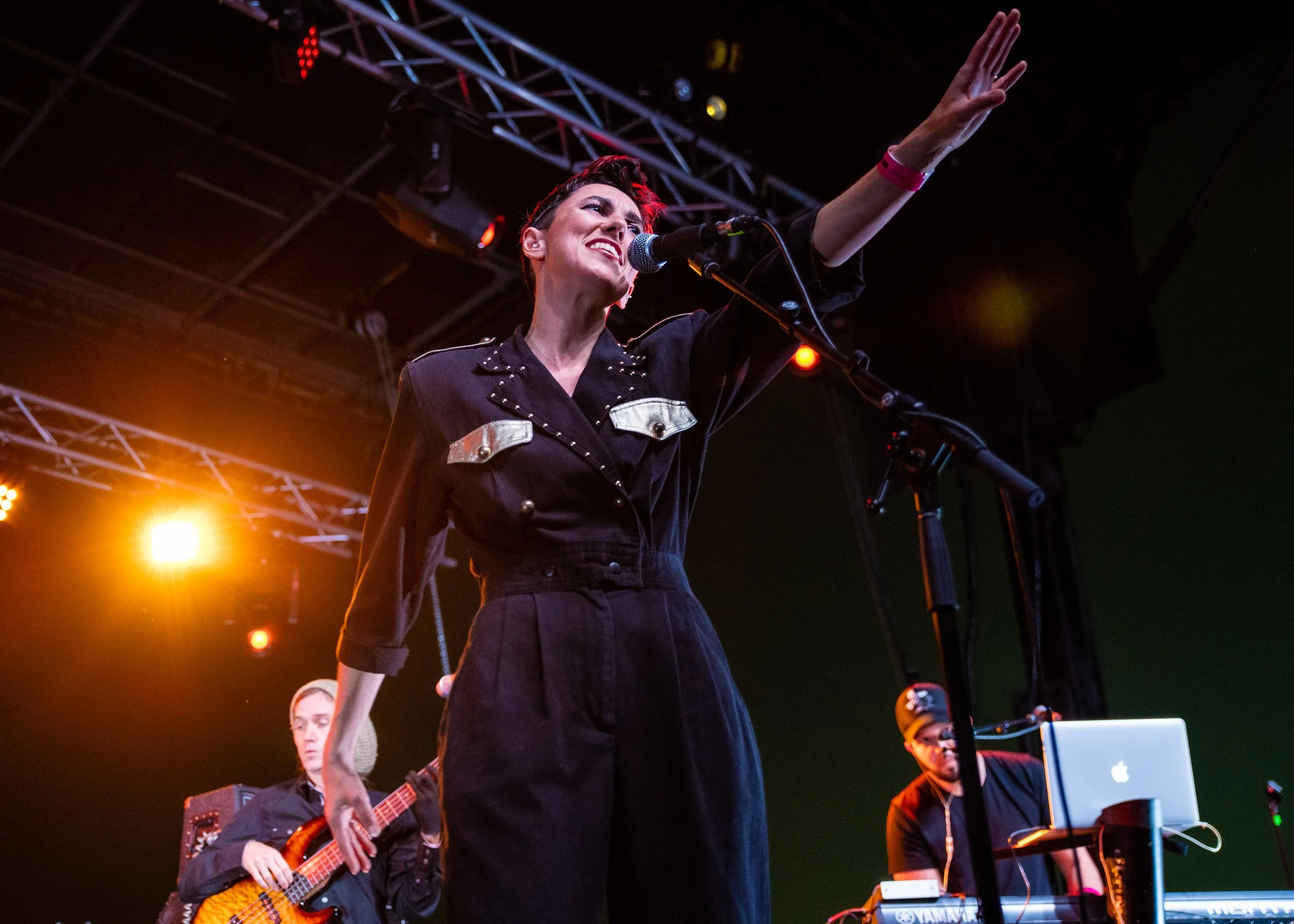
Photo by David Brendan Hall.
You’re looking ahead in your career at this point, what projects are you working on right now that you’re excited about, whether from a music perspective, a cultural perspective, even a political perspective? What are things you’re currently doing that are giving you passion?
I’m definitely learning some new instruments, which is really fun. I feel like every new instrument I pick up, something different comes out. I have this beautiful instrument — it’s called a charango — that I started playing after I’d gone to El Salvador in like 2010. I’m excited about diving into craft, I guess would be the easiest answer to that question. I’ve learned didgeridoo, I’m learning Venezuelan maracas, I have a loop station I’ve been diving into. So there’s all these different things, I just like wanting to get hands-on, get good at it. And I’ve never really been that artist, I’ve never been somebody who wants to sit down and play scales on guitar. And I now have reached that point in my career where I’m like, oh, this is fun. So craft, really diving into craft, I’m very excited about that.
I’m also excited about bringing more intention to what I do, and not that what I do isn’t intentional, but, have you ever been to a show where it feels like a transformational experience, and then you might go to a show and it’s a great show, but it wasn’t necessarily transformational? I would say I’ve been more in the “it’s a great show, it’s a performance” space. I want to be more in this space of taking people on a true journey, and channeling more than just entertaining. I don’t exactly know what that looks like, I think I will figure that out along the way, and I think I’m already doing some of that.
I’m looking for more of a fullness in my career as a whole, whether that means I’m recording, collaborating, learning my craft, or performing. I’m somebody who’s very much gotten where I’ve gotten because I’ve kind of flown by the seat of my pants and taken whatever is given to me, and it’s been great, and I’m now at a point where that is hindering me. So it’s more of a, how do I be intentional and be truly in the driver’s seat and decide where I want to go, instead of just being like, oh cool, I’ll go there. A lot of that is coming from some very intense personal work I’ve been doing over the last five years. So yes, I have some projects I’m working on, yes, I’m writing music, collaborations is a big thing, but I would say, in general, where I’m aiming at is more of a fullness in what I’m offering to the world. And of course, part of that is going to use the gift of music, and part of that is just my presence, wherever I’m at.
This is a little bit of a big question, but what’s something you’d like to be asked about your career that you haven’t really been asked about before?
Let’s see, what’s a way to describe this… It’s kind of like, I can imagine being a caterpillar. And the caterpillar has no idea, when it goes into a cocoon and turns into goo, what’s coming. It has no idea it’s going to turn, that’s crazy when you really think about it, how one thing is literally crawling on the ground, and then it forms a cocoon and literally turns into mush, and then after the mush it turns into a butterfly and starts flying and has colors. That’s actually crazy. And so I think I’m in a process. I’m past the goo phase, I know that. And I’m at the point where I’m trying to break out of this thing. And you have to build up strength, you can’t go open the cocoon for that butterfly, or else it won’t live very long. It has to open itself, it’s got to do the work in order for its wings to work, and I think that’s kind of where I’m at in my career.
But I do know that a huge part of what is coming is being way more intensely vocal about standing up for our communities, about using music as a tool against oppression, against, you know, people are literally being stolen off the streets here. There’s literally a genocide that we’re funding. There’s so many things, and so I’m definitely finding more of a kind of a fire in my belly about, okay, how do I, what do I, how do I speak out against those things? And so there’s definitely, because you asked about politics, way more pointed stuff that’s going to be coming from me, for sure. Again, I don’t exactly know. I’m trying to allow instead of decide, if that makes sense. My calendar is not super full, and I like that, because I like to have some space for things to just kind of play into what the universe is providing, as opposed to, Gina, I’m gonna do this. So, I don’t know, I’m definitely in a kind of a big turning point in my career, and it’s so interesting to have people ask what’s coming next, and I’m like, I don’t have a good answer for you.
But I do know that for all of us, there’s a lot more fullness to what it means to actually just be here. It’s a miracle. It’s a miracle that we’re here. It’s a miracle that we have breath in our lungs and we get to experience life, and we get to fight for each other, those are all a miracle. It’s like, how do we help people wake up to that? And I think whatever’s next for me has something to do with helping people wake up.
Is there anything else you would want someone to immediately know about you, if they were reading about you in a newspaper or a magazine? What would be the logline you’d give for yourself, if you had to give one?
It’s funny, when you ask that question, there’s a part of me that goes into business brain, the things people like to hear. It’s like, okay, Latin Grammy nominee, wrote music for Brené Brown’s podcast, Tiny Desk concert, whatever, right? So there’s those things, use those as you will.
There’s also, obviously, the college fund that my wife and I founded for girls in El Salvador, which is still an ongoing project, very important, probably the coolest thing that my music’s ever been a part of is the fact that we can help send young women to college. And maybe this goes back to the question you were asking, what’s missing, what do you want somebody to ask, I’ve come to truly discover I’m a seeker, and for instance, my day is more filled with learning about consciousness and astrology, stuff that’s not music. I’m not a musician’s musician, I’m much more of a seeker. I love deep conversations. I would love truly connecting with somebody and having a really interesting three-hour conversation more than going to see a concert, or playing one, probably. I live for that stuff. And so I think that’s probably something people don’t really know about me, unless they know me. I probably come across as more of the performer part of myself for a lot of people. And I think at this point in my life, I’m much more, I’m just much more introspective than people might understand. So, yeah, I’m here for random, philosophical, esoteric conversations.
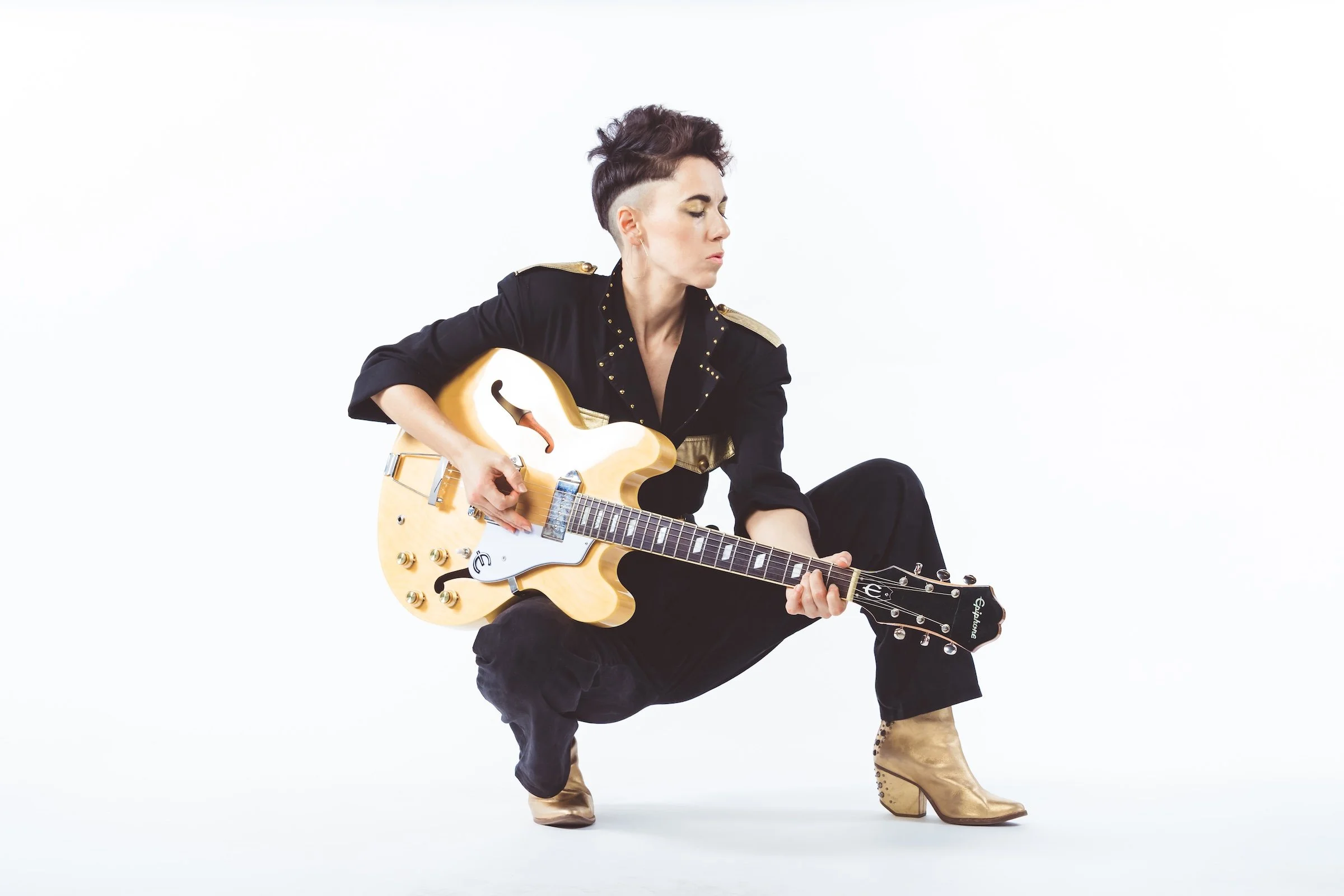
Photo by Ismael Quintanilla III.
